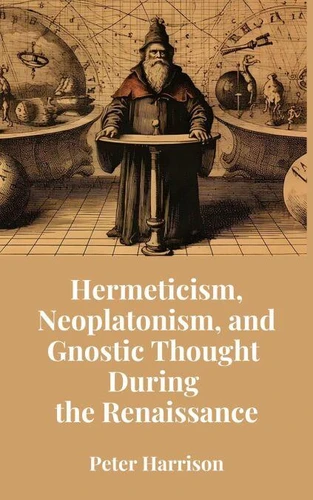
This book explores the intricate tapestry of thought that characterized the Renaissance, a period that marked the rebirth of classical philosophy and the flourishing of theological, mystical, and esoteric traditions. Blending the study of ancient Greek and Roman sources with contemporary Christian thought, Renaissance intellectuals sought to harmonize reason, faith, and mystical insight. At the heart of this work is an examination of the major philosophical movements of the Renaissance, particularly humanism and Neoplatonism, which emphasized human dignity, potential, and the pursuit of divine knowledge.
Figures like Marsilio Ficino and Giovanni Pico della Mirandola played a pivotal role in synthesizing the ideas of Plato and Christian theology, promoting a vision of humanity's capacity for spiritual ascent and union with the divine. The book also delves into the role of magic and esoteric traditions, such as astrology, alchemy, and theurgy, which were seen not as superstitious but as legitimate fields of inquiry.
These practices were rooted in the belief that the natural world was imbued with divine forces, and through them, individuals could access higher knowledge and transform both the material and spiritual realms. Prominent thinkers like John Dee, Paracelsus, and Heinrich Cornelius Agrippa stand as examples of those who sought to bridge the gap between science and magic. Furthermore, the book explores Renaissance gnosis-the pursuit of hidden, spiritual knowledge-through the revival of ancient mystical traditions such as Hermeticism and Kabbalah.
These esoteric systems provided a framework for understanding the universe's deeper, symbolic structures, and they significantly influenced the era's intellectual landscape. Ultimately, this book argues that the Renaissance was a period of profound philosophical and theological synthesis, where the lines between science, magic, and mysticism were blurred in the pursuit of a holistic understanding of the cosmos and humanity's place within it.
Through this synthesis, the Renaissance laid the foundation for modern science, philosophy, and spirituality, leaving a lasting impact on Western thought.
This book explores the intricate tapestry of thought that characterized the Renaissance, a period that marked the rebirth of classical philosophy and the flourishing of theological, mystical, and esoteric traditions. Blending the study of ancient Greek and Roman sources with contemporary Christian thought, Renaissance intellectuals sought to harmonize reason, faith, and mystical insight. At the heart of this work is an examination of the major philosophical movements of the Renaissance, particularly humanism and Neoplatonism, which emphasized human dignity, potential, and the pursuit of divine knowledge.
Figures like Marsilio Ficino and Giovanni Pico della Mirandola played a pivotal role in synthesizing the ideas of Plato and Christian theology, promoting a vision of humanity's capacity for spiritual ascent and union with the divine. The book also delves into the role of magic and esoteric traditions, such as astrology, alchemy, and theurgy, which were seen not as superstitious but as legitimate fields of inquiry.
These practices were rooted in the belief that the natural world was imbued with divine forces, and through them, individuals could access higher knowledge and transform both the material and spiritual realms. Prominent thinkers like John Dee, Paracelsus, and Heinrich Cornelius Agrippa stand as examples of those who sought to bridge the gap between science and magic. Furthermore, the book explores Renaissance gnosis-the pursuit of hidden, spiritual knowledge-through the revival of ancient mystical traditions such as Hermeticism and Kabbalah.
These esoteric systems provided a framework for understanding the universe's deeper, symbolic structures, and they significantly influenced the era's intellectual landscape. Ultimately, this book argues that the Renaissance was a period of profound philosophical and theological synthesis, where the lines between science, magic, and mysticism were blurred in the pursuit of a holistic understanding of the cosmos and humanity's place within it.
Through this synthesis, the Renaissance laid the foundation for modern science, philosophy, and spirituality, leaving a lasting impact on Western thought.

 , qui est-ce ?



