SOLDES
Jusqu'à -70% sur une sélection d'articles*

Nouveauté
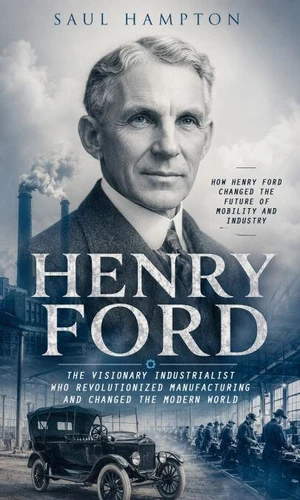
Henry Ford: How Henry Ford Changed the Future of Mobility and Industry. The Visionary Industrialist Who Revolutionized Manufacturing and Changed the Modern World
Par :Formats :
Disponible dans votre compte client Decitre ou Furet du Nord dès validation de votre commande. Le format ePub est :
- Compatible avec une lecture sur My Vivlio (smartphone, tablette, ordinateur)
- Compatible avec une lecture sur liseuses Vivlio
- Pour les liseuses autres que Vivlio, vous devez utiliser le logiciel Adobe Digital Edition. Non compatible avec la lecture sur les liseuses Kindle, Remarkable et Sony
 , qui est-ce ?
Notre partenaire de plateforme de lecture numérique où vous retrouverez l'ensemble de vos ebooks gratuitement
Pour en savoir plus sur nos ebooks, consultez notre aide en ligne ici
C'est si simple ! Lisez votre ebook avec l'app Vivlio sur votre tablette, mobile ou ordinateur :

- FormatePub
- ISBN8902166511
- EAN9798902166511
- Date de parution10/06/2026
- Protection num.Digital Watermarking
- Taille1 Mo
- Infos supplémentairesepub
- ÉditeurRob Satterfield
Résumé
Henry ford was one of the most influential industrialists in modern history, a visionary entrepreneur whose innovations transformed manufacturing, transportation, and the global economy. Born on july 30, 1863, in greenfield township, ford developed an early fascination with machinery and engineering. His determination to create affordable automobiles for ordinary people led to the founding of the ford motor company in 1903, a company that would become one of the world's most successful automobile manufacturers.
Ford's greatest achievement was not the invention of the automobile itself but the perfection of mass production techniques.
In 1913, he introduced the moving assembly line, a revolutionary manufacturing process that dramatically reduced the time required to build a car. This innovation increased efficiency, lowered production costs, and made automobiles accessible to millions of people. The introduction of the ford model t further cemented his legacy, as it became one of the most popular and influential vehicles in history. Beyond manufacturing, ford reshaped labor practices by introducing the famous five-dollar workday, significantly increasing wages for many factory workers.
His approach improved productivity and set new standards for industrial employment. Ford believed that workers should earn enough to afford the products they helped create, helping to expand the american middle class. Despite his remarkable accomplishments, ford's life and career were not without controversy. Historians continue to examine both his business achievements and his personal views, providing a complex picture of his legacy.
In 1913, he introduced the moving assembly line, a revolutionary manufacturing process that dramatically reduced the time required to build a car. This innovation increased efficiency, lowered production costs, and made automobiles accessible to millions of people. The introduction of the ford model t further cemented his legacy, as it became one of the most popular and influential vehicles in history. Beyond manufacturing, ford reshaped labor practices by introducing the famous five-dollar workday, significantly increasing wages for many factory workers.
His approach improved productivity and set new standards for industrial employment. Ford believed that workers should earn enough to afford the products they helped create, helping to expand the american middle class. Despite his remarkable accomplishments, ford's life and career were not without controversy. Historians continue to examine both his business achievements and his personal views, providing a complex picture of his legacy.