SOLDES
Jusqu'à -70% sur une sélection d'articles*

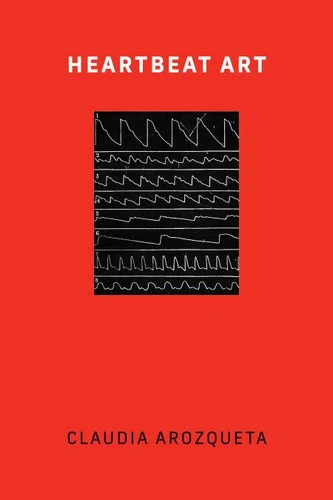
Heartbeat Art
Par :Formats :
Disponible dans votre compte client Decitre ou Furet du Nord dès validation de votre commande. Le format ePub protégé est :
- Compatible avec une lecture sur My Vivlio (smartphone, tablette, ordinateur)
- Compatible avec une lecture sur liseuses Vivlio
- Pour les liseuses autres que Vivlio, vous devez utiliser le logiciel Adobe Digital Edition. Non compatible avec la lecture sur les liseuses Kindle, Remarkable et Sony
- Non compatible avec un achat hors France métropolitaine
 , qui est-ce ?
Notre partenaire de plateforme de lecture numérique où vous retrouverez l'ensemble de vos ebooks gratuitement
Pour en savoir plus sur nos ebooks, consultez notre aide en ligne ici
C'est si simple ! Lisez votre ebook avec l'app Vivlio sur votre tablette, mobile ou ordinateur :

- Nombre de pages298
- FormatePub
- ISBN978-0-262-38261-8
- EAN9780262382618
- Date de parution27/05/2025
- Protection num.Adobe DRM
- Taille87 Mo
- Infos supplémentairesepub
- ÉditeurThe MIT Press
Résumé
An innovative history of heartbeats, pulse, and technoscience in the works of a wide international array of artists and composers. Heartbeat Art is the first study of how artists have engaged with heartbeats from the 1960s to the present, creating sophisticated and technological works that project in unique ways the circulatory processes of the body beyond its physical limits. Drawing on a long history of scientific and artistic experimentation, Claudia Arozqueta offers detailed case studies of heartbeat works by a wide range of international artists working at the interconnections of our bodies, art, and science and technology, including Yoko Ono, Pauline Oliveros, Heinz Mack, Brian O'Doherty, Teresa Burga, and many others.
Technoscientific advances in monitoring heartbeats and pulses in the nineteenth century-such as René Laennec's stethoscope, Étienne-Jules Marey's sphygmograph and chronophotograph, and Willem Einthoven's electrocardiograph-transformed the movements of the heart into audible and visual representations. Artists saw in the language of these scientific technologies a way of mingling the inner with the outer, the physical with the technological, and data with flesh.
Using archival research, interviews, and correspondence, Arozqueta describes significant works in detail, discusses their contexts and development, and examines the larger classes and contours of this neglected area of artistic activity. Other artists in the volume include Éliane Radigue, Jean Dupuy, Linda Montano, Catherine Richards, Diana Domingues, Mona Hatoum, Rafael Lozano-Hemmer, and Christian Boltanski.
Technoscientific advances in monitoring heartbeats and pulses in the nineteenth century-such as René Laennec's stethoscope, Étienne-Jules Marey's sphygmograph and chronophotograph, and Willem Einthoven's electrocardiograph-transformed the movements of the heart into audible and visual representations. Artists saw in the language of these scientific technologies a way of mingling the inner with the outer, the physical with the technological, and data with flesh.
Using archival research, interviews, and correspondence, Arozqueta describes significant works in detail, discusses their contexts and development, and examines the larger classes and contours of this neglected area of artistic activity. Other artists in the volume include Éliane Radigue, Jean Dupuy, Linda Montano, Catherine Richards, Diana Domingues, Mona Hatoum, Rafael Lozano-Hemmer, and Christian Boltanski.