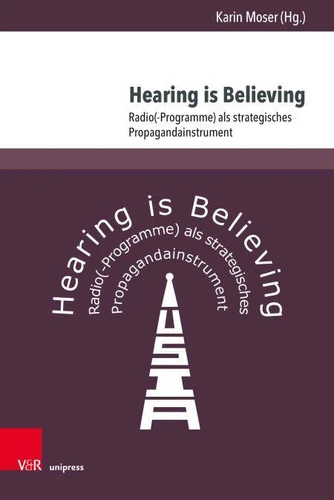
Hearing is Believing. Radio(-Programme) als strategisches Propagandainstrument
Par : , , , ,Formats :
Disponible dans votre compte client Decitre ou Furet du Nord dès validation de votre commande. Le format PDF est :
- Compatible avec une lecture sur My Vivlio (smartphone, tablette, ordinateur)
- Compatible avec une lecture sur liseuses Vivlio
- Pour les liseuses autres que Vivlio, vous devez utiliser le logiciel Adobe Digital Edition. Non compatible avec la lecture sur les liseuses Kindle, Remarkable et Sony
 , qui est-ce ?
Notre partenaire de plateforme de lecture numérique où vous retrouverez l'ensemble de vos ebooks gratuitement
Pour en savoir plus sur nos ebooks, consultez notre aide en ligne ici
C'est si simple ! Lisez votre ebook avec l'app Vivlio sur votre tablette, mobile ou ordinateur :

- Nombre de pages264
- FormatPDF
- ISBN978-3-8470-1306-8
- EAN9783847013068
- Date de parution17/04/2023
- Protection num.pas de protection
- Taille4 Mo
- Infos supplémentairespdf
- ÉditeurV&R Unipress
Résumé
Über Jahrzehnte war das Radio das aktuellste und zudem das einzige Live-Nachrichten-Medium. (Staatliche) Grenzen kannte der Rundfunk nicht und die politischen Machthaber wussten dies bestmöglich zu nutzen. Der Band gibt Einblick in interdisziplinäre Forschungsarbeiten zur Radiogeschichte. Die Beiträge erörtern die Rolle des Hörfunks bei der Konstruktion neuer und alter nationaler, sozialer, kultureller und religiöser Identitäten.
Der Einfluss einzelner Radiomacher*innen auf die Gestaltung der Programme wird thematisiert, wie auch die politischen und gesellschaftlichen Dynamiken, die manche Radiosendungen auslösten. Schließlich werden auch Parallelen der Medienlogik und Mediennutzung zwischen dem Radio (Frühzeit) und dem Internet zur Diskussion gestellt. For decades, radio was the most up-to-date and the only live news medium.
Broadcasting had no (state) boundaries, and the political rulers knew how to make the best possible use of this. This volume provides insight into interdisciplinary research on radio history. The contributions discuss the role of radio in the construction of new and old national, social, cultural and religious identities. The influence of individual radio producers on the design of programs is addressed, as are the political and social dynamics that triggered some radio broadcasts.
Finally, parallels in media logic and media use between radio (early days) and the Internet will be discussed.
Der Einfluss einzelner Radiomacher*innen auf die Gestaltung der Programme wird thematisiert, wie auch die politischen und gesellschaftlichen Dynamiken, die manche Radiosendungen auslösten. Schließlich werden auch Parallelen der Medienlogik und Mediennutzung zwischen dem Radio (Frühzeit) und dem Internet zur Diskussion gestellt. For decades, radio was the most up-to-date and the only live news medium.
Broadcasting had no (state) boundaries, and the political rulers knew how to make the best possible use of this. This volume provides insight into interdisciplinary research on radio history. The contributions discuss the role of radio in the construction of new and old national, social, cultural and religious identities. The influence of individual radio producers on the design of programs is addressed, as are the political and social dynamics that triggered some radio broadcasts.
Finally, parallels in media logic and media use between radio (early days) and the Internet will be discussed.