
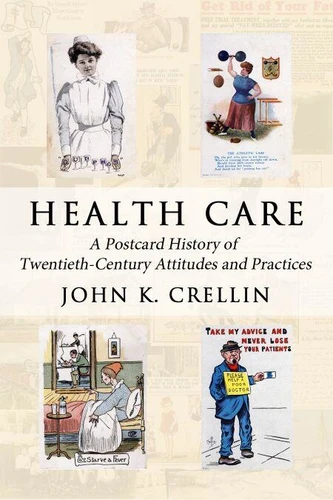
Health Care. A Postcard History of Twentieth-Century Attitudes and Practices
Par :Formats :
Disponible dans votre compte client Decitre ou Furet du Nord dès validation de votre commande. Le format ePub est :
- Compatible avec une lecture sur My Vivlio (smartphone, tablette, ordinateur)
- Compatible avec une lecture sur liseuses Vivlio
- Pour les liseuses autres que Vivlio, vous devez utiliser le logiciel Adobe Digital Edition. Non compatible avec la lecture sur les liseuses Kindle, Remarkable et Sony
 , qui est-ce ?
Notre partenaire de plateforme de lecture numérique où vous retrouverez l'ensemble de vos ebooks gratuitement
Pour en savoir plus sur nos ebooks, consultez notre aide en ligne ici
C'est si simple ! Lisez votre ebook avec l'app Vivlio sur votre tablette, mobile ou ordinateur :

- FormatePub
- ISBN978-1-77117-313-1
- EAN9781771173131
- Date de parution27/06/2014
- Protection num.Digital Watermarking
- Taille9 Mo
- Infos supplémentairesepub
- ÉditeurFlanker Press
Résumé
Ever since their early twentieth-century "Golden Age, " postcards on both sides of the Atlantic have recorded popular culture. Through humour, views of urban and rural places, photographs of individuals, fantasy, advertising, and succinct messages, they have documented art and entertainment, social events, commercial practices, reform movements, political propaganda, and countless byways of society.
They are the centre of this account as it looks at key facets of daily life, the diverse efforts of individuals to maintain health and treat minor illnesses, relationships between patients and physicians, and popular stereotypes of health care practitioners working inside and outside hospitals. Readers who wonder whether the scope of cards is too limited to tell any story of health care will find that postcard publishers, in looking for commercial success, focused on topics they felt would resonate with the public.
This certainly applied to the countless humorous cards, some "naughty, " "fruity, " or "saucy, " that circulated far more widely than "medical" jokes in such magazines as Punch or the New Yorker. Cards, then, reflect popular fascination with physicians, nurses, medical institutions, the body, illness, and the maintenance of health, albeit with the limitation of little attention to scientific and medical discoveries. In this book, John Crellin explores the entertaining and creative ways that postcards pertaining to health care provided medical knowledge, treatment options, and humour.
Filled with colour images of these postcards, Health Care: A Postcard History of Twentieth-Century Attitudes and Practices provides an in-depth examination of the cards' history and their impact on the culture of medicine. *due to the photo heavy nature of this publication, full colour ereaders, tablets, or desktops are recommended.
They are the centre of this account as it looks at key facets of daily life, the diverse efforts of individuals to maintain health and treat minor illnesses, relationships between patients and physicians, and popular stereotypes of health care practitioners working inside and outside hospitals. Readers who wonder whether the scope of cards is too limited to tell any story of health care will find that postcard publishers, in looking for commercial success, focused on topics they felt would resonate with the public.
This certainly applied to the countless humorous cards, some "naughty, " "fruity, " or "saucy, " that circulated far more widely than "medical" jokes in such magazines as Punch or the New Yorker. Cards, then, reflect popular fascination with physicians, nurses, medical institutions, the body, illness, and the maintenance of health, albeit with the limitation of little attention to scientific and medical discoveries. In this book, John Crellin explores the entertaining and creative ways that postcards pertaining to health care provided medical knowledge, treatment options, and humour.
Filled with colour images of these postcards, Health Care: A Postcard History of Twentieth-Century Attitudes and Practices provides an in-depth examination of the cards' history and their impact on the culture of medicine. *due to the photo heavy nature of this publication, full colour ereaders, tablets, or desktops are recommended.
A propos de John K. Crellin

7,99 €

9,49 €