
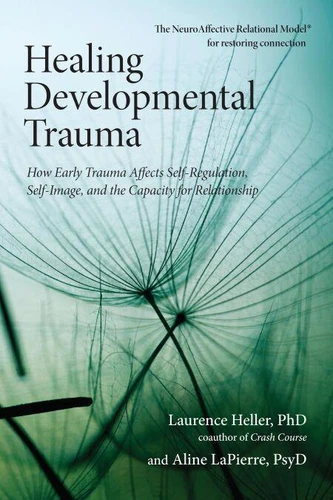
Healing Developmental Trauma
Par :Formats :
Disponible dans votre compte client Decitre ou Furet du Nord dès validation de votre commande. Le format ePub protégé est :
- Compatible avec une lecture sur My Vivlio (smartphone, tablette, ordinateur)
- Compatible avec une lecture sur liseuses Vivlio
- Pour les liseuses autres que Vivlio, vous devez utiliser le logiciel Adobe Digital Edition. Non compatible avec la lecture sur les liseuses Kindle, Remarkable et Sony
- Non compatible avec un achat hors France métropolitaine
 , qui est-ce ?
Notre partenaire de plateforme de lecture numérique où vous retrouverez l'ensemble de vos ebooks gratuitement
Pour en savoir plus sur nos ebooks, consultez notre aide en ligne ici
C'est si simple ! Lisez votre ebook avec l'app Vivlio sur votre tablette, mobile ou ordinateur :

- Nombre de pages320
- FormatePub
- ISBN978-1-58394-511-7
- EAN9781583945117
- Date de parution25/09/2012
- Protection num.Adobe DRM
- Taille4 Mo
- Infos supplémentairesepub
- ÉditeurNorth Atlantic Books
Résumé
This "well-organized, valuable" guide draws from somatic-based psychotherapy and neuroscience to offer "clear guidance" for coping with childhood trauma (Peter Levine, author of Waking the Tiger and In an Unspoken Voice). Although it may seem that people suffer from an endless number of emotional problems and challenges, Laurence Heller and Aline LaPierre maintain that most of these can be traced to five biologically based organizing principles: the need for connection, attunement, trust, autonomy, and love-sexuality.
They describe how early trauma impairs the capacity for connection to self and others and how the ensuing diminished aliveness is the hidden dimension that underlies most psychological and many physiological problems. Heller and LaPierre introduce the NeuroAffective Relational Model® (NARM), a method that integrates bottom-up and top-down approaches to regulate the nervous system and resolve distortions of identity such as low self-esteem, shame, and chronic self-judgment that are the outcome of developmental and relational trauma.
While not ignoring a person's past, NARM emphasizes working in the present moment to focus on clients' strengths, resources, and resiliency in order to integrate the experience of connection that sustains our physiology, psychology, and capacity for relationship.
They describe how early trauma impairs the capacity for connection to self and others and how the ensuing diminished aliveness is the hidden dimension that underlies most psychological and many physiological problems. Heller and LaPierre introduce the NeuroAffective Relational Model® (NARM), a method that integrates bottom-up and top-down approaches to regulate the nervous system and resolve distortions of identity such as low self-esteem, shame, and chronic self-judgment that are the outcome of developmental and relational trauma.
While not ignoring a person's past, NARM emphasizes working in the present moment to focus on clients' strengths, resources, and resiliency in order to integrate the experience of connection that sustains our physiology, psychology, and capacity for relationship.