SOLDES
Jusqu'à -70% sur une sélection d'articles*

Nouveauté
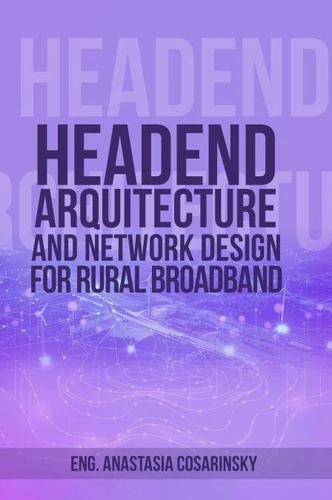
Headend architecture and network design for rural broadband
Par :Formats :
Disponible dans votre compte client Decitre ou Furet du Nord dès validation de votre commande. Le format ePub est :
- Compatible avec une lecture sur My Vivlio (smartphone, tablette, ordinateur)
- Compatible avec une lecture sur liseuses Vivlio
- Pour les liseuses autres que Vivlio, vous devez utiliser le logiciel Adobe Digital Edition. Non compatible avec la lecture sur les liseuses Kindle, Remarkable et Sony
 , qui est-ce ?
Notre partenaire de plateforme de lecture numérique où vous retrouverez l'ensemble de vos ebooks gratuitement
Pour en savoir plus sur nos ebooks, consultez notre aide en ligne ici
C'est si simple ! Lisez votre ebook avec l'app Vivlio sur votre tablette, mobile ou ordinateur :

- FormatePub
- ISBN8233364327
- EAN9798233364327
- Date de parution19/05/2026
- Protection num.pas de protection
- Infos supplémentairesepub
- ÉditeurLinda Balsamo
Résumé
The expansion of broadband into rural areas is a real engineering challenge, where every decision directly impacts the viability of the project. Unlike urban environments, designing networks in low-density regions requires balancing architectural criteria, costs, resilience, and adaptability under conditions that are rarely ideal. This book addresses that challenge from a practical and rigorous perspective, guiding the reader through the complete design of modern telecommunications infrastructures.
From the evolution of the HeadEnd to the implementation of technologies such as DOCSIS, FTTH (GPON and XGS-PON), fixed wireless access, and LEO satellite solutions. Rather than limiting itself to theory, this work delves into dimensioning criteria, comparative technical analysis, and field-applicable design methodologies, integrating key factors such as coverage, demand, cost per kilometer, and operational continuity.
Aimed at engineers, technicians, and telecommunications professionals, this book positions itself as a reference for those who need to make design decisions grounded in technical expertise and long-term vision. This is not a book about why rural areas should be connected. It is a book about how to do it correctly-with engineering judgment, technical rigor, and a long-term perspective.
From the evolution of the HeadEnd to the implementation of technologies such as DOCSIS, FTTH (GPON and XGS-PON), fixed wireless access, and LEO satellite solutions. Rather than limiting itself to theory, this work delves into dimensioning criteria, comparative technical analysis, and field-applicable design methodologies, integrating key factors such as coverage, demand, cost per kilometer, and operational continuity.
Aimed at engineers, technicians, and telecommunications professionals, this book positions itself as a reference for those who need to make design decisions grounded in technical expertise and long-term vision. This is not a book about why rural areas should be connected. It is a book about how to do it correctly-with engineering judgment, technical rigor, and a long-term perspective.