SOLDES
Jusqu'à -70% sur une sélection d'articles*

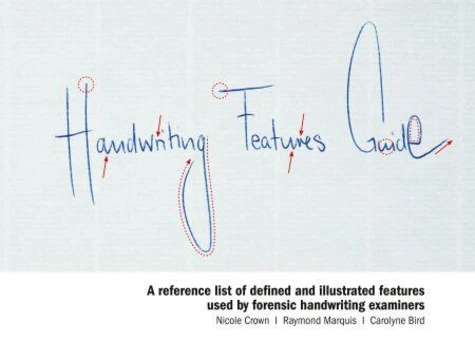
Handwriting Features Guide. A reference list of defined and illustrated features used by forensic handwriting examiners
Par : , ,Formats :
Disponible dans votre compte client Decitre ou Furet du Nord dès validation de votre commande. Le format ePub est :
- Compatible avec une lecture sur My Vivlio (smartphone, tablette, ordinateur)
- Compatible avec une lecture sur liseuses Vivlio
- Pour les liseuses autres que Vivlio, vous devez utiliser le logiciel Adobe Digital Edition. Non compatible avec la lecture sur les liseuses Kindle, Remarkable et Sony
 , qui est-ce ?
Notre partenaire de plateforme de lecture numérique où vous retrouverez l'ensemble de vos ebooks gratuitement
Pour en savoir plus sur nos ebooks, consultez notre aide en ligne ici
C'est si simple ! Lisez votre ebook avec l'app Vivlio sur votre tablette, mobile ou ordinateur :

- Nombre de pages142
- FormatePub
- ISBN978-3-7583-3467-2
- EAN9783758334672
- Date de parution27/06/2024
- Protection num.Digital Watermarking
- Taille22 Mo
- Infos supplémentairesepub
- ÉditeurBooks on Demand
Résumé
Forensic handwriting examination follows a process comprised of four main steps: Analysis, Comparison, Evaluation, and Verification (ACE-V). While the process itself has been described and refined, very little effort has been undertaken to establish a clear and detailed list of features that the forensic handwriting examiner (FHE) must analyse in the first step of the examination. In-depth analysis of graphical features of handwritten texts or signatures is integral to the work of FHEs when requested to give an expert opinion, typically to determine whether a questioned handwritten item has been written by a specific writer.
Indeed, it is these graphical features that will be compared between questioned and known samples, to establish similarities and differences that will finally be evaluated under two or more mutually exclusive propositions to reach a conclusion. A robust analysis based on clearly defined features is necessary to provide reliable and unbiased opinions. Numerous books and articles describe handwriting features that should be observed during the analysis stage of the examination.
However, the descriptions can be vague, and several authors may use different terms to describe the same feature. It may also happen that the same term is used to define different characteristics. Moreover, illustrations of terms are often scarce and some- times of little help to understand what the corresponding features are. These problems are exacerbated when trying to equate terms in different languages. This project presents a comprehensive depiction of writing fea- tures (particularly found in Latin script) relating to the whole hand- written text or signature, which the authors consider relevant to help answer questions commonly ad- dressed by FHEs. It is the authors hope that the FHE community utilises this illustrated list of writing features, which we believe can promote a thorough and complete analysis and provide a common language for FHEs.
Thus, this project seeks to contribute to establishing a systematic and standardized approach to forensic handwriting examination and move the discipline towards reproducibility and validation.
Indeed, it is these graphical features that will be compared between questioned and known samples, to establish similarities and differences that will finally be evaluated under two or more mutually exclusive propositions to reach a conclusion. A robust analysis based on clearly defined features is necessary to provide reliable and unbiased opinions. Numerous books and articles describe handwriting features that should be observed during the analysis stage of the examination.
However, the descriptions can be vague, and several authors may use different terms to describe the same feature. It may also happen that the same term is used to define different characteristics. Moreover, illustrations of terms are often scarce and some- times of little help to understand what the corresponding features are. These problems are exacerbated when trying to equate terms in different languages. This project presents a comprehensive depiction of writing fea- tures (particularly found in Latin script) relating to the whole hand- written text or signature, which the authors consider relevant to help answer questions commonly ad- dressed by FHEs. It is the authors hope that the FHE community utilises this illustrated list of writing features, which we believe can promote a thorough and complete analysis and provide a common language for FHEs.
Thus, this project seeks to contribute to establishing a systematic and standardized approach to forensic handwriting examination and move the discipline towards reproducibility and validation.