SOLDES
Jusqu'à -70% sur une sélection d'articles*

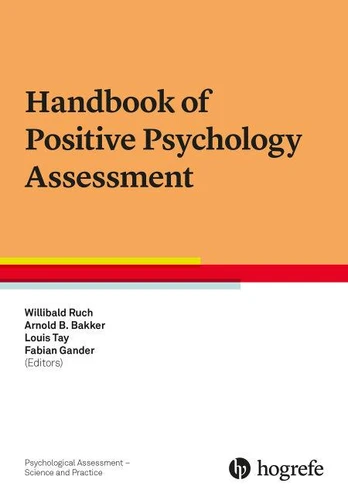
Handbook of Positive Psychology Assessment
Par : , , ,Formats :
Disponible dans votre compte client Decitre ou Furet du Nord dès validation de votre commande. Le format ePub est :
- Compatible avec une lecture sur My Vivlio (smartphone, tablette, ordinateur)
- Compatible avec une lecture sur liseuses Vivlio
- Pour les liseuses autres que Vivlio, vous devez utiliser le logiciel Adobe Digital Edition. Non compatible avec la lecture sur les liseuses Kindle, Remarkable et Sony
 , qui est-ce ?
Notre partenaire de plateforme de lecture numérique où vous retrouverez l'ensemble de vos ebooks gratuitement
Pour en savoir plus sur nos ebooks, consultez notre aide en ligne ici
C'est si simple ! Lisez votre ebook avec l'app Vivlio sur votre tablette, mobile ou ordinateur :

- Nombre de pages464
- FormatePub
- ISBN978-1-61334-619-8
- EAN9781613346198
- Date de parution01/10/2022
- Protection num.Digital Watermarking
- Taille5 Mo
- Infos supplémentairesepub
- ÉditeurHogrefe Publishing
Résumé
Learn how to select the right positive psychology (PP) assessment tool for the right situation Written by internationally renowned authors Looks at well-being, traits, states, and behavior Presents the relevant psychometric properties Considers assessment challenges Recommends selection in different settings Explores new directions in PP A comprehensive guide to selecting positive psychology assessment tools This volume gives a state-of-the-art overview of assessment in the field of positive psychology, including a comprehensive survey of current theories, approaches, issues, and assessment instruments.
In four sections, leading experts look at different conceptualizations of well-being and discuss specific traits, states, and behaviors. New directions in positive psychology are also explored, including measuring primal world beliefs, imagination, self-transcendent experiences, and nostalgia. Each chapter provides an introductory background to the positive psychology topic reviews the most relevant assessment instruments, and discusses the specific assessment-related challenges.
Recommendations for selecting assessment tools are included for specific settings, such as school, relationships, health and clinical settings, leisure, and interventions. This book is a must for positive psychology researchers, instructors, students, and practitioners wanting to select the right positive psychology instrument for the right situation.
In four sections, leading experts look at different conceptualizations of well-being and discuss specific traits, states, and behaviors. New directions in positive psychology are also explored, including measuring primal world beliefs, imagination, self-transcendent experiences, and nostalgia. Each chapter provides an introductory background to the positive psychology topic reviews the most relevant assessment instruments, and discusses the specific assessment-related challenges.
Recommendations for selecting assessment tools are included for specific settings, such as school, relationships, health and clinical settings, leisure, and interventions. This book is a must for positive psychology researchers, instructors, students, and practitioners wanting to select the right positive psychology instrument for the right situation.