
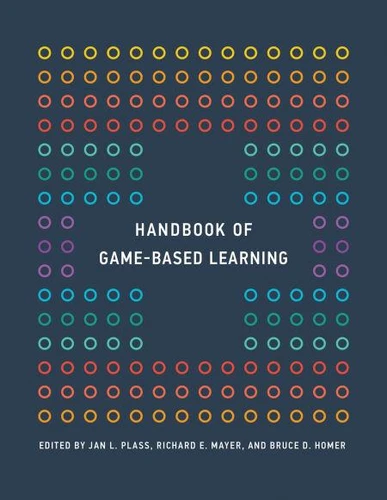
Handbook of Game-Based Learning
Par : , ,Formats :
Disponible dans votre compte client Decitre ou Furet du Nord dès validation de votre commande. Le format ePub protégé est :
- Compatible avec une lecture sur My Vivlio (smartphone, tablette, ordinateur)
- Compatible avec une lecture sur liseuses Vivlio
- Pour les liseuses autres que Vivlio, vous devez utiliser le logiciel Adobe Digital Edition. Non compatible avec la lecture sur les liseuses Kindle, Remarkable et Sony
- Non compatible avec un achat hors France métropolitaine
 , qui est-ce ?
Notre partenaire de plateforme de lecture numérique où vous retrouverez l'ensemble de vos ebooks gratuitement
Pour en savoir plus sur nos ebooks, consultez notre aide en ligne ici
C'est si simple ! Lisez votre ebook avec l'app Vivlio sur votre tablette, mobile ou ordinateur :

- Nombre de pages600
- FormatePub
- ISBN978-0-262-35654-1
- EAN9780262356541
- Date de parution04/02/2020
- Protection num.Adobe DRM
- Taille65 Mo
- Infos supplémentairesepub
- ÉditeurThe MIT Press
Résumé
A comprehensive introduction to the latest research and theory on learning and instruction with computer games. This book offers a comprehensive introduction to the latest research on learning and instruction with computer games. Unlike other books on the topic, which emphasize game development or best practices, Handbook of Game-Based Learning is based on empirical findings and grounded in psychological and learning sciences theory.
The contributors, all leading researchers in the field, offer a range of perspectives, including cognitive, motivational, affective, and sociocultural. They explore research on whether (and how) computer games can help students learn educational content and academic skills; which game features (including feedback, incentives, adaptivity, narrative theme, and game mechanics) can improve the instructional effectiveness of these games; and applications, including games for learning in STEM disciplines, for training cognitive skills, for workforce learning, and for assessment.
The Handbook offers an indispensable reference both for readers with practical interests in designing or selecting effective game-based learning environments and for scholars who conduct or evaluate research in the field. It can also be used in courses related to play, cognition, motivation, affect, instruction, and technology. ContributorsRoger Azevedo, Ryan S. Baker, Daphne Bavelier, Amanda E. Bradbury, Ruth C.
Clark, Michele D. Dickey, Hamadi Henderson, Bruce D. Homer, Fengfeng Ke, Younsu Kim, Charles E. Kinzer, Eric Klopfer, James C. Lester, Kristina Loderer, Richard E. Mayer, Bradford W. Mott, Nicholas V. Mudrick, Brian Nelson, Frank Nguyen, V. Elizabeth Owen, Shashank Pawar, Reinhard Pekrun, Jan L. Plass, Charles Raffale, Jonathon Reinhardt, C. Scott Rigby, Jonathan P. Rowe, Richard M. Ryan, Ruth N. Schwartz, Quinnipiac Valerie J.
Shute, Randall D. Spain, Constance Steinkuehler, Frankie Tam, Michelle Taub, Meredith Thompson, Steven L. Thorne, A. M. Tsaasan
The contributors, all leading researchers in the field, offer a range of perspectives, including cognitive, motivational, affective, and sociocultural. They explore research on whether (and how) computer games can help students learn educational content and academic skills; which game features (including feedback, incentives, adaptivity, narrative theme, and game mechanics) can improve the instructional effectiveness of these games; and applications, including games for learning in STEM disciplines, for training cognitive skills, for workforce learning, and for assessment.
The Handbook offers an indispensable reference both for readers with practical interests in designing or selecting effective game-based learning environments and for scholars who conduct or evaluate research in the field. It can also be used in courses related to play, cognition, motivation, affect, instruction, and technology. ContributorsRoger Azevedo, Ryan S. Baker, Daphne Bavelier, Amanda E. Bradbury, Ruth C.
Clark, Michele D. Dickey, Hamadi Henderson, Bruce D. Homer, Fengfeng Ke, Younsu Kim, Charles E. Kinzer, Eric Klopfer, James C. Lester, Kristina Loderer, Richard E. Mayer, Bradford W. Mott, Nicholas V. Mudrick, Brian Nelson, Frank Nguyen, V. Elizabeth Owen, Shashank Pawar, Reinhard Pekrun, Jan L. Plass, Charles Raffale, Jonathon Reinhardt, C. Scott Rigby, Jonathan P. Rowe, Richard M. Ryan, Ruth N. Schwartz, Quinnipiac Valerie J.
Shute, Randall D. Spain, Constance Steinkuehler, Frankie Tam, Michelle Taub, Meredith Thompson, Steven L. Thorne, A. M. Tsaasan