SOLDES
Jusqu'à -70% sur une sélection d'articles*

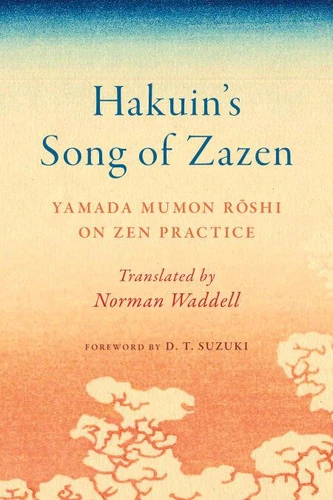
Hakuin's Song of Zazen. Yamada Mumon Roshi on Zen Practice
Par : , ,Formats :
Disponible dans votre compte client Decitre ou Furet du Nord dès validation de votre commande. Le format ePub protégé est :
- Compatible avec une lecture sur My Vivlio (smartphone, tablette, ordinateur)
- Compatible avec une lecture sur liseuses Vivlio
- Pour les liseuses autres que Vivlio, vous devez utiliser le logiciel Adobe Digital Edition. Non compatible avec la lecture sur les liseuses Kindle, Remarkable et Sony
- Non compatible avec un achat hors France métropolitaine
 , qui est-ce ?
Notre partenaire de plateforme de lecture numérique où vous retrouverez l'ensemble de vos ebooks gratuitement
Pour en savoir plus sur nos ebooks, consultez notre aide en ligne ici
C'est si simple ! Lisez votre ebook avec l'app Vivlio sur votre tablette, mobile ou ordinateur :

- Nombre de pages232
- FormatePub
- ISBN978-0-8348-4549-7
- EAN9780834845497
- Date de parution06/02/2024
- Protection num.Adobe DRM
- Taille2 Mo
- Infos supplémentairesepub
- ÉditeurShambhala
Résumé
Renowned modern Zen master Yamada Mumon Roshi uses Hakuin's famous poem of spiritual realization, Song of Zazen, as a starting point to embark on a lively commentary on Zen practice in contemporary life. First published in Japan in 1962, Hakuin's Song of Zazen is a celebrated collection of short essays by Zen master Yamada Mumon Roshi. Translated into English for the first time, it introduces the story of Hakuin's early life and training, then uses his classic Zen chanting poem, Song of Zazen, to make wide-ranging considerations of the Zen tradition and its applications in modern Japanese life. As Daisetz Suzuki remarks in his foreword, what gives Mumon's book its unique flavor and makes it different from previous works by Zen teachers are his forays into matters of ordinary, everyday life, expanding his Zen teaching to encompass interests that are closely linked with his lay audience.
He responds to a news article that catches his eye in the morning paper, delivers criticism on contemporary political and social trends, explores matters as diversified as the uses of atomic energy, the court culture of seventeenth-century France, a leper hospital on an island in the Inland Sea, Albert Schweitzer and other noted Western figures-and more. In doing this Mumon gives readers open access to the opinions, judgements, and practical thinking of a leading Zen master-a map of his planet, so to speak.
Each brief chapter of Mumon's book is an invitation to follow Hakuin and himself down the path of true Zen realization.
He responds to a news article that catches his eye in the morning paper, delivers criticism on contemporary political and social trends, explores matters as diversified as the uses of atomic energy, the court culture of seventeenth-century France, a leper hospital on an island in the Inland Sea, Albert Schweitzer and other noted Western figures-and more. In doing this Mumon gives readers open access to the opinions, judgements, and practical thinking of a leading Zen master-a map of his planet, so to speak.
Each brief chapter of Mumon's book is an invitation to follow Hakuin and himself down the path of true Zen realization.