
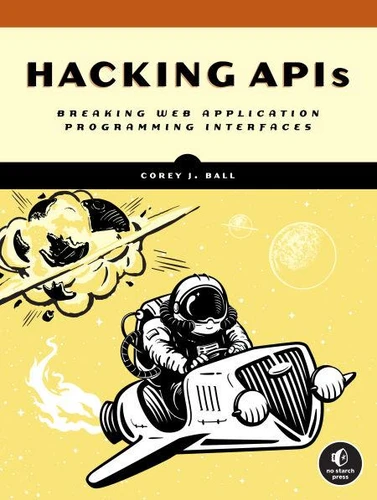
Hacking APIs. Breaking Web Application Programming Interfaces
Par :Formats :
Disponible dans votre compte client Decitre ou Furet du Nord dès validation de votre commande. Le format ePub est :
- Compatible avec une lecture sur My Vivlio (smartphone, tablette, ordinateur)
- Compatible avec une lecture sur liseuses Vivlio
- Pour les liseuses autres que Vivlio, vous devez utiliser le logiciel Adobe Digital Edition. Non compatible avec la lecture sur les liseuses Kindle, Remarkable et Sony
 , qui est-ce ?
Notre partenaire de plateforme de lecture numérique où vous retrouverez l'ensemble de vos ebooks gratuitement
Pour en savoir plus sur nos ebooks, consultez notre aide en ligne ici
C'est si simple ! Lisez votre ebook avec l'app Vivlio sur votre tablette, mobile ou ordinateur :

- Nombre de pages368
- FormatePub
- ISBN978-1-7185-0245-1
- EAN9781718502451
- Date de parution05/07/2022
- Protection num.pas de protection
- Taille12 Mo
- Infos supplémentairesepub
- ÉditeurNo Starch Press
Résumé
Hacking APIs is a crash course in web API security testing that will prepare you to penetration-test APIs, reap high rewards on bug bounty programs, and make your own APIs more secure. Hacking APIs is a crash course on web API security testing that will prepare you to penetration-test APIs, reap high rewards on bug bounty programs, and make your own APIs more secure. You'll learn how REST and GraphQL APIs work in the wild and set up a streamlined API testing lab with Burp Suite and Postman.
Then you'll master tools useful for reconnaissance, endpoint analysis, and fuzzing, such as Kiterunner and OWASP Amass. Next, you'll learn to perform common attacks, like those targeting an API's authentication mechanisms and the injection vulnerabilities commonly found in web applications. You'll also learn techniques for bypassing protections against these attacks. In the book's nine guided labs, which target intentionally vulnerable APIs, you'll practice: .
Enumerating APIs users and endpoints using fuzzing techniques . Using Postman to discover an excessive data exposure vulnerability . Performing a JSON Web Token attack against an API authentication process . Combining multiple API attack techniques to perform a NoSQL injection . Attacking a GraphQL API to uncover a broken object level authorization vulnerability By the end of the book, you'll be prepared to uncover those high-payout API bugs other hackers aren't finding and improve the security of applications on the web.
Then you'll master tools useful for reconnaissance, endpoint analysis, and fuzzing, such as Kiterunner and OWASP Amass. Next, you'll learn to perform common attacks, like those targeting an API's authentication mechanisms and the injection vulnerabilities commonly found in web applications. You'll also learn techniques for bypassing protections against these attacks. In the book's nine guided labs, which target intentionally vulnerable APIs, you'll practice: .
Enumerating APIs users and endpoints using fuzzing techniques . Using Postman to discover an excessive data exposure vulnerability . Performing a JSON Web Token attack against an API authentication process . Combining multiple API attack techniques to perform a NoSQL injection . Attacking a GraphQL API to uncover a broken object level authorization vulnerability By the end of the book, you'll be prepared to uncover those high-payout API bugs other hackers aren't finding and improve the security of applications on the web.