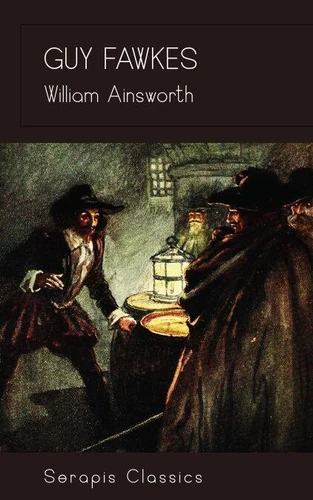
Guy Fawkes (Serapis Classics)
Par :Formats :
Disponible dans votre compte client Decitre ou Furet du Nord dès validation de votre commande. Le format ePub est :
- Compatible avec une lecture sur My Vivlio (smartphone, tablette, ordinateur)
- Compatible avec une lecture sur liseuses Vivlio
- Pour les liseuses autres que Vivlio, vous devez utiliser le logiciel Adobe Digital Edition. Non compatible avec la lecture sur les liseuses Kindle, Remarkable et Sony
 , qui est-ce ?
Notre partenaire de plateforme de lecture numérique où vous retrouverez l'ensemble de vos ebooks gratuitement
Pour en savoir plus sur nos ebooks, consultez notre aide en ligne ici
C'est si simple ! Lisez votre ebook avec l'app Vivlio sur votre tablette, mobile ou ordinateur :

- Nombre de pages152
- FormatePub
- ISBN978-3-96255-922-9
- EAN9783962559229
- Date de parution16/10/2017
- Protection num.pas de protection
- Taille1 Mo
- Infos supplémentairesepub
- ÉditeurMusaicum Books
Résumé
Guy Fawkes first appeared as a serial in Bentley's Miscellany, between January and November 1840. The first of William Harrison Ainsworth's seven "Lancashire novels", the story is based on the Gunpowder Plot of 1605, an unsuccessful attempt to blow up the Houses of Parliament. Ainsworth relied heavily on historical documents describing the trial and execution of the conspirators, of whom Fawkes was one, but he also embellished the known facts.
He invented the character of Viviana Radcliffe, daughter of the prominent Radcliffe family of Ordsall Hall - who becomes Fawkes's wife - and introduced supernatural elements into the story, such as the ability of the alchemist, John Dee, to raise the spirits of the dead. The novel's themes deal with British politics and history, focusing on the events surrounding the 1605 plot to destroy Parliament.
Ainsworth also introduced gothic elements, to add a terrifying component to the work. The novel was very popular, and marked the beginning of Ainsworth's 40-year career in historical romances, but it was not universally admired. Edgar Allan Poe described the style of writing as "turgid pretension".
He invented the character of Viviana Radcliffe, daughter of the prominent Radcliffe family of Ordsall Hall - who becomes Fawkes's wife - and introduced supernatural elements into the story, such as the ability of the alchemist, John Dee, to raise the spirits of the dead. The novel's themes deal with British politics and history, focusing on the events surrounding the 1605 plot to destroy Parliament.
Ainsworth also introduced gothic elements, to add a terrifying component to the work. The novel was very popular, and marked the beginning of Ainsworth's 40-year career in historical romances, but it was not universally admired. Edgar Allan Poe described the style of writing as "turgid pretension".