SOLDES
Jusqu'à -70% sur une sélection d'articles*

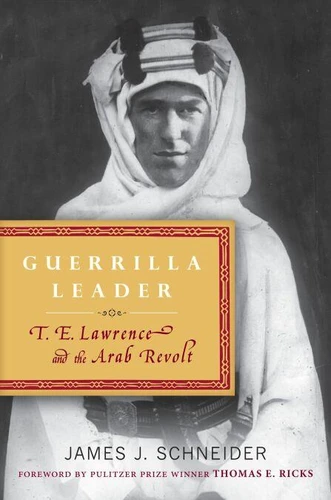
Guerrilla Leader. T. E. Lawrence and the Arab Revolt
Par :Formats :
Disponible dans votre compte client Decitre ou Furet du Nord dès validation de votre commande. Le format ePub protégé est :
- Compatible avec une lecture sur My Vivlio (smartphone, tablette, ordinateur)
- Compatible avec une lecture sur liseuses Vivlio
- Pour les liseuses autres que Vivlio, vous devez utiliser le logiciel Adobe Digital Edition. Non compatible avec la lecture sur les liseuses Kindle, Remarkable et Sony
- Non compatible avec un achat hors France métropolitaine
 , qui est-ce ?
Notre partenaire de plateforme de lecture numérique où vous retrouverez l'ensemble de vos ebooks gratuitement
Pour en savoir plus sur nos ebooks, consultez notre aide en ligne ici
C'est si simple ! Lisez votre ebook avec l'app Vivlio sur votre tablette, mobile ou ordinateur :

- Nombre de pages368
- FormatePub
- ISBN978-0-345-53020-2
- EAN9780345530202
- Date de parution08/11/2011
- Protection num.Adobe DRM
- Taille2 Mo
- Infos supplémentairesepub
- ÉditeurBANTAM
Résumé
Reclaiming T. E. Lawrence from hype and legend, James J. Schneider offers a startling reexamination of this leader's critical role in shaping the modern Middle East. Just how did this obscure British junior intelligence officer, unschooled in the art of war, become "Lawrence of Arabia" and inspire a loosely affiliated cluster of desert tribes to band together in an all-or-nothing insurgency against their Turkish overlords? The answers have profound implications for our time as well, as a new generation of revolutionaries pulls pages from Lawrence's playbook of irregular warfare.
Blowing up trains and harassing supply lines with dynamite and audacity, Lawrence drove the mighty armies of the Ottoman Turks to distraction and brought the Arabs to the brink of self-determination. But his success hinged on more than just innovative tactics: As he immersed himself in Arab culture, Lawrence learned that a traditional Western-style hierarchical command structure could not work in a tribal system where warriors lead not only an army but an entire community.
Weaving quotations from Lawrence's own writings with the histories of his greatest campaigns, Schneider shows how this stranger in a strange land evolved over time into the model of the self-reflective, enabling leader who eschews glory for himself but instead seeks to empower his followers. Guerrilla Leader also offers a valuable analysis of Lawrence's innovative theories of insurgency and their relevance to the ongoing turmoil in the Middle East.
This exhaustively researched book also provides a detailed account of the Arab revolt, from the stunning assault on the port city of Aqaba to the bloody, Pyrrhic victory at Tafileh, the only set-piece battle Lawrence fought during the Great Arab Revolt. Lawrence emerged from the latter experience physically and mentally drained, incapable of continuing as a military commander, and, Schneider asserts, in the early stages of the post-traumatic stress disorder that would bedevil him for the rest of his life. The author then carries the narrative forward to the final slaughter of the Turks at Tafas and the Arabs' ultimate victory at Damascus.
With insights into Lawrence's views on discipline, his fear of failure, and his enduring influence on military leadership in the twenty-first century, Guerrilla Leader is a bracingly fresh take on one of the great subjects of the modern era. Foreward by Pulitzer Prize winner Thomas E. Ricks
Blowing up trains and harassing supply lines with dynamite and audacity, Lawrence drove the mighty armies of the Ottoman Turks to distraction and brought the Arabs to the brink of self-determination. But his success hinged on more than just innovative tactics: As he immersed himself in Arab culture, Lawrence learned that a traditional Western-style hierarchical command structure could not work in a tribal system where warriors lead not only an army but an entire community.
Weaving quotations from Lawrence's own writings with the histories of his greatest campaigns, Schneider shows how this stranger in a strange land evolved over time into the model of the self-reflective, enabling leader who eschews glory for himself but instead seeks to empower his followers. Guerrilla Leader also offers a valuable analysis of Lawrence's innovative theories of insurgency and their relevance to the ongoing turmoil in the Middle East.
This exhaustively researched book also provides a detailed account of the Arab revolt, from the stunning assault on the port city of Aqaba to the bloody, Pyrrhic victory at Tafileh, the only set-piece battle Lawrence fought during the Great Arab Revolt. Lawrence emerged from the latter experience physically and mentally drained, incapable of continuing as a military commander, and, Schneider asserts, in the early stages of the post-traumatic stress disorder that would bedevil him for the rest of his life. The author then carries the narrative forward to the final slaughter of the Turks at Tafas and the Arabs' ultimate victory at Damascus.
With insights into Lawrence's views on discipline, his fear of failure, and his enduring influence on military leadership in the twenty-first century, Guerrilla Leader is a bracingly fresh take on one of the great subjects of the modern era. Foreward by Pulitzer Prize winner Thomas E. Ricks