SOLDES
Jusqu'à -70% sur une sélection d'articles*

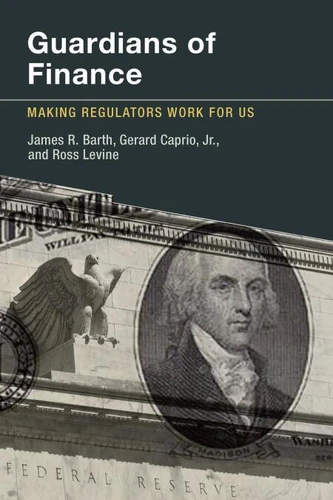
Guardians of Finance. Making Regulators Work for Us
Par : , ,Formats :
Disponible dans votre compte client Decitre ou Furet du Nord dès validation de votre commande. Le format ePub protégé est :
- Compatible avec une lecture sur My Vivlio (smartphone, tablette, ordinateur)
- Compatible avec une lecture sur liseuses Vivlio
- Pour les liseuses autres que Vivlio, vous devez utiliser le logiciel Adobe Digital Edition. Non compatible avec la lecture sur les liseuses Kindle, Remarkable et Sony
- Non compatible avec un achat hors France métropolitaine
 , qui est-ce ?
Notre partenaire de plateforme de lecture numérique où vous retrouverez l'ensemble de vos ebooks gratuitement
Pour en savoir plus sur nos ebooks, consultez notre aide en ligne ici
C'est si simple ! Lisez votre ebook avec l'app Vivlio sur votre tablette, mobile ou ordinateur :

- Nombre de pages296
- FormatePub
- ISBN978-0-262-30076-6
- EAN9780262300766
- Date de parution10/02/2012
- Protection num.Adobe DRM
- Taille952 Ko
- Infos supplémentairesepub
- ÉditeurThe MIT Press
Résumé
How the unaccountable, unmonitorable, and unchecked actions of regulators precipitated the global financial crisis; and how to reform the system. The recent financial crisis was an accident, a "perfect storm" fueled by an unforeseeable confluence of events that unfortunately combined to bring down the global financial systems. Or at least this is the story told and retold by a chorus of luminaries that includes Timothy Geithner, Henry Paulson, Robert Rubin, Ben Bernanke, and Alan Greenspan.
In Guardians of Finance, economists James Barth, Gerard Caprio, and Ross Levine argue that the financial meltdown of 2007 to 2009 was no accident; it was negligent homicide. They show that senior regulatory officials around the world knew or should have known that their policies were destabilizing the global financial system and yet chose not to act until the crisis had fully emerged. Barth, Caprio, and Levine propose a reform to counter this systemic failure: the establishment of a "Sentinel" to provide an informed, expert, and independent assessment of financial regulation.
Its sole power would be to demand information and to evaluate it from the perspective of the public-rather than that of the financial industry, the regulators, or politicians.
In Guardians of Finance, economists James Barth, Gerard Caprio, and Ross Levine argue that the financial meltdown of 2007 to 2009 was no accident; it was negligent homicide. They show that senior regulatory officials around the world knew or should have known that their policies were destabilizing the global financial system and yet chose not to act until the crisis had fully emerged. Barth, Caprio, and Levine propose a reform to counter this systemic failure: the establishment of a "Sentinel" to provide an informed, expert, and independent assessment of financial regulation.
Its sole power would be to demand information and to evaluate it from the perspective of the public-rather than that of the financial industry, the regulators, or politicians.