
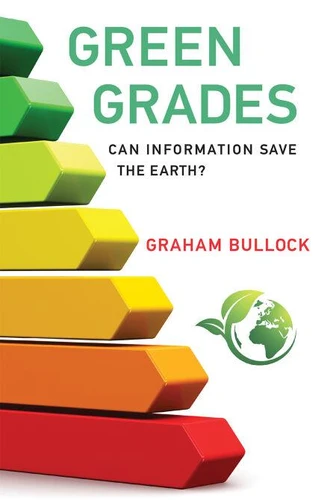
Green Grades. Can Information Save the Earth?
Par :Formats :
Disponible dans votre compte client Decitre ou Furet du Nord dès validation de votre commande. Le format ePub protégé est :
- Compatible avec une lecture sur My Vivlio (smartphone, tablette, ordinateur)
- Compatible avec une lecture sur liseuses Vivlio
- Pour les liseuses autres que Vivlio, vous devez utiliser le logiciel Adobe Digital Edition. Non compatible avec la lecture sur les liseuses Kindle, Remarkable et Sony
- Non compatible avec un achat hors France métropolitaine
 , qui est-ce ?
Notre partenaire de plateforme de lecture numérique où vous retrouverez l'ensemble de vos ebooks gratuitement
Pour en savoir plus sur nos ebooks, consultez notre aide en ligne ici
C'est si simple ! Lisez votre ebook avec l'app Vivlio sur votre tablette, mobile ou ordinateur :

- Nombre de pages408
- FormatePub
- ISBN978-0-262-34099-1
- EAN9780262340991
- Date de parution01/09/2017
- Protection num.Adobe DRM
- Taille3 Mo
- Infos supplémentairesepub
- ÉditeurThe MIT Press
Résumé
A comprehensive assessment and analysis of the validity, trustworthiness, and effectiveness, of such environmental ratings as ENERGY STAR, LEED, and USDA Organic. Consumers are confronted with a confusing array of environmental ratings on products that range from refrigerators to shampoos. Is the information that these ratings represent trustworthy, accurate, or even relevant to environmental concerns? "Information optimists" believe that these "green grades" can play an important role in saving the planet.
"Information pessimists" consider them a distraction from pursuing legislative and regulatory actions. In this book, Graham Bullock offers a comprehensive assessment and analysis of the effectiveness and validity of such environmental ratings as ENERGY STAR, USDA Organic, the Forest Stewardship Council, LEED, and the Toxic 100 Air Polluters Index. Bullock stakes out a position as an "information realist, " acknowledging both the contributions and the limitations of these initiatives.
Drawing on interviews, case studies, and an original dataset of 245 environmental ratings and certifications, he examines what he calls the information value chain of green grades: organizational associations, content, methods, interfaces, and outcomes. He explores the relevance of the information to the issues; the legitimacy and accountability of sponsoring or cooperating organizations; the reliability of methods used to develop the information; the prominence and intelligibility of communication to the public; and the effects and effectiveness of the information after it emerges from the value chain.
Bullock's analysis offers a realistic appraisal of the role of information-based environmental governance-its benefits and shortcomings-and its relation to other governance strategies.
"Information pessimists" consider them a distraction from pursuing legislative and regulatory actions. In this book, Graham Bullock offers a comprehensive assessment and analysis of the effectiveness and validity of such environmental ratings as ENERGY STAR, USDA Organic, the Forest Stewardship Council, LEED, and the Toxic 100 Air Polluters Index. Bullock stakes out a position as an "information realist, " acknowledging both the contributions and the limitations of these initiatives.
Drawing on interviews, case studies, and an original dataset of 245 environmental ratings and certifications, he examines what he calls the information value chain of green grades: organizational associations, content, methods, interfaces, and outcomes. He explores the relevance of the information to the issues; the legitimacy and accountability of sponsoring or cooperating organizations; the reliability of methods used to develop the information; the prominence and intelligibility of communication to the public; and the effects and effectiveness of the information after it emerges from the value chain.
Bullock's analysis offers a realistic appraisal of the role of information-based environmental governance-its benefits and shortcomings-and its relation to other governance strategies.