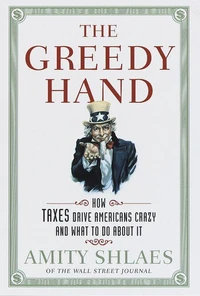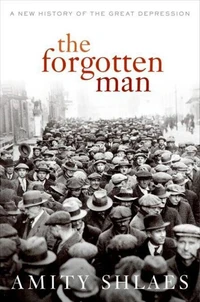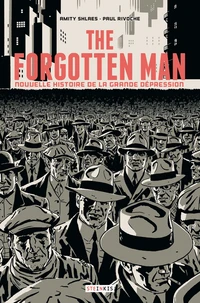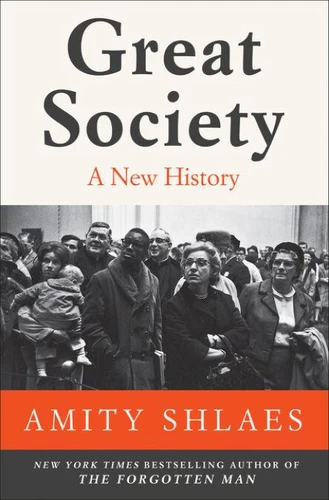
Amity Shlaes is the author of four New York Times bestsellers: The Forgotten Man: A New History of the Great Depression, The Forgotten Man/Graphic, Coolidge, and The Greedy Hand: How Taxes Drive Americans Crazy. Shlaes chairs the board of the Calvin Coolidge Presidential Foundation and the Manhattan Institute's Hayek Book Prize, and serves as a scholar at the King's College. Twitter: @amityshlaes
Great Society. A New History
Par :Formats :
Disponible dans votre compte client Decitre ou Furet du Nord dès validation de votre commande. Le format ePub protégé est :
- Compatible avec une lecture sur My Vivlio (smartphone, tablette, ordinateur)
- Compatible avec une lecture sur liseuses Vivlio
- Pour les liseuses autres que Vivlio, vous devez utiliser le logiciel Adobe Digital Edition. Non compatible avec la lecture sur les liseuses Kindle, Remarkable et Sony
- Non compatible avec un achat hors France métropolitaine
 , qui est-ce ?
Notre partenaire de plateforme de lecture numérique où vous retrouverez l'ensemble de vos ebooks gratuitement
Pour en savoir plus sur nos ebooks, consultez notre aide en ligne ici
C'est si simple ! Lisez votre ebook avec l'app Vivlio sur votre tablette, mobile ou ordinateur :

- FormatePub
- ISBN978-0-06-219910-2
- EAN9780062199102
- Date de parution19/11/2019
- Protection num.Adobe DRM
- Infos supplémentairesepub
- ÉditeurHarper
Résumé
The New York Times bestselling author of The Forgotten Man and Coolidge offers a stunning work of revisionist history about our last great period of idealism, the 1960s, with burning relevance for our contemporary challenges."Great Society is accurate history that reads like a novel, covering the high hopes and catastrophic missteps of our well-meaning leaders." -Alan GreenspanToday, a battle rages in our country.
Many Americans are attracted to socialism and economic redistribution while opponents of those ideas argue for purer American capitalism. In the 1960s, Americans sought the same goals many seek now: an end to poverty, higher standards of living for the middle class, a better environment and more access to health care and education. Then, too, we debated socialism and capitalism, public sector reform versus private sector advancement.
Time and again, whether under John F. Kennedy, Lyndon Johnson, or Richard Nixon, the country chose the public sector. Yet the targets of our idealism proved elusive. What's more, Johnson's War on Poverty and Nixon's programs shackled millions of families in permanent government dependence. Ironically, Shlaes argues, the costs of entitlement commitments made a half century ago preclude the very reforms that Americans will need in coming decades.
In Great Society, Shlaes offers a powerful companion to her legendary history of the 1930s, The Forgotten Man, and shows that in fact there was scant difference between two presidents we consider opposites: Johnson and Nixon. Just as technocratic military planning by "the Best and the Brightest" made failure in the Vietnam War inevitable, so planning by a team of the domestic best and brightest guaranteed fiasco at home.
At once history and biography, Great Society sketches moving portraits of the characters in this transformative period, from U. S. Presidents to the visionary UAW leader Walter Reuther, the founders of Intel, and Federal Reserve chairmen William McChesney Martin and Arthur Burns. Great Society casts new light on other figures too, from Ronald Reagan, then governor of California, to the socialist Michael Harrington and the protest movement leader Tom Hayden.
Drawing on her classic economic expertise and deep political history knowledge, Shlaes upends the traditional narrative of the era, providing a damning indictment of the consequences of thoughtless idealism with striking relevance for today. Great Society captures a dramatic contest with lessons both dark and bright for our own time. This major work of American history reveals: A Revisionist History of the 1960s: Shlaes upends the traditional narrative, showing there was scant difference between the presidential approaches of Lyndon Johnson and Richard Nixon.
Economic History and Policy: Discover how the domestic "Best and the Brightest" guaranteed fiasco at home, creating costly entitlement programs that still impact America today. Socialism vs. Capitalism: Explore the central debate of the era, from the socialist arguments of Michael Harrington to the emerging free-market principles of Ronald Reagan. Key Historical Figures: Go beyond the presidents with vivid portraits of transformative characters, including UAW leader Walter Reuther, protest leader Tom Hayden, and the founders of Intel.
Many Americans are attracted to socialism and economic redistribution while opponents of those ideas argue for purer American capitalism. In the 1960s, Americans sought the same goals many seek now: an end to poverty, higher standards of living for the middle class, a better environment and more access to health care and education. Then, too, we debated socialism and capitalism, public sector reform versus private sector advancement.
Time and again, whether under John F. Kennedy, Lyndon Johnson, or Richard Nixon, the country chose the public sector. Yet the targets of our idealism proved elusive. What's more, Johnson's War on Poverty and Nixon's programs shackled millions of families in permanent government dependence. Ironically, Shlaes argues, the costs of entitlement commitments made a half century ago preclude the very reforms that Americans will need in coming decades.
In Great Society, Shlaes offers a powerful companion to her legendary history of the 1930s, The Forgotten Man, and shows that in fact there was scant difference between two presidents we consider opposites: Johnson and Nixon. Just as technocratic military planning by "the Best and the Brightest" made failure in the Vietnam War inevitable, so planning by a team of the domestic best and brightest guaranteed fiasco at home.
At once history and biography, Great Society sketches moving portraits of the characters in this transformative period, from U. S. Presidents to the visionary UAW leader Walter Reuther, the founders of Intel, and Federal Reserve chairmen William McChesney Martin and Arthur Burns. Great Society casts new light on other figures too, from Ronald Reagan, then governor of California, to the socialist Michael Harrington and the protest movement leader Tom Hayden.
Drawing on her classic economic expertise and deep political history knowledge, Shlaes upends the traditional narrative of the era, providing a damning indictment of the consequences of thoughtless idealism with striking relevance for today. Great Society captures a dramatic contest with lessons both dark and bright for our own time. This major work of American history reveals: A Revisionist History of the 1960s: Shlaes upends the traditional narrative, showing there was scant difference between the presidential approaches of Lyndon Johnson and Richard Nixon.
Economic History and Policy: Discover how the domestic "Best and the Brightest" guaranteed fiasco at home, creating costly entitlement programs that still impact America today. Socialism vs. Capitalism: Explore the central debate of the era, from the socialist arguments of Michael Harrington to the emerging free-market principles of Ronald Reagan. Key Historical Figures: Go beyond the presidents with vivid portraits of transformative characters, including UAW leader Walter Reuther, protest leader Tom Hayden, and the founders of Intel.
A propos de Amity Shlaes
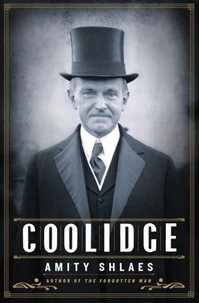
Coolidge
E-book
11,99 €