SOLDES
Jusqu'à -70% sur une sélection d'articles*

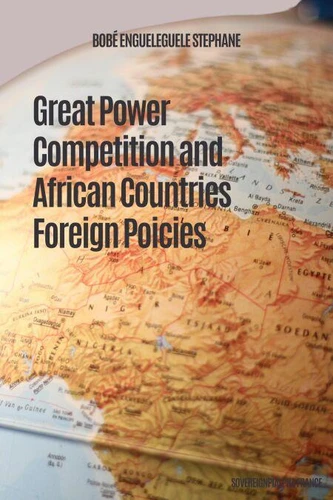
Great Power Competition and African Countries Foreign Policies
Par :Formats :
Disponible dans votre compte client Decitre ou Furet du Nord dès validation de votre commande. Le format ePub est :
- Compatible avec une lecture sur My Vivlio (smartphone, tablette, ordinateur)
- Compatible avec une lecture sur liseuses Vivlio
- Pour les liseuses autres que Vivlio, vous devez utiliser le logiciel Adobe Digital Edition. Non compatible avec la lecture sur les liseuses Kindle, Remarkable et Sony
 , qui est-ce ?
Notre partenaire de plateforme de lecture numérique où vous retrouverez l'ensemble de vos ebooks gratuitement
Pour en savoir plus sur nos ebooks, consultez notre aide en ligne ici
C'est si simple ! Lisez votre ebook avec l'app Vivlio sur votre tablette, mobile ou ordinateur :

- FormatePub
- ISBN8230115922
- EAN9798230115922
- Date de parution20/03/2025
- Protection num.pas de protection
- Infos supplémentairesepub
- ÉditeurIndependently Published
Résumé
This book examines how African nations navigate intensifying Great Power competition and formulate their foreign policy preferences by balancing external influences. It identifies the key factors driving their often-fluid stances. It portrays African states as active participants in international relations, leveraging their resources and power to balance threats and advance their national interests.
Contrary to being passive actors in the global balance of power, African countries strategically maximise their opportunities by diversifying partnerships and aligning selectively with competing powers. Foreign policy is shown to be strongly insulated from other government apparatuses, driven by security concerns, risk management, and state survival. The study adopts a historical perspective within the realism paradigm, tracing the relationships between foreign powers and African entities from the pre-colonial era to the present.
The analysis highlights how African states manage external pressures, diversify alliances, and navigate the ongoing "scramble" for African natural resources. This dynamic enables states to boost military capabilities and mitigate national risks while maintaining agency in the face of polar and nonpolar actors.
Contrary to being passive actors in the global balance of power, African countries strategically maximise their opportunities by diversifying partnerships and aligning selectively with competing powers. Foreign policy is shown to be strongly insulated from other government apparatuses, driven by security concerns, risk management, and state survival. The study adopts a historical perspective within the realism paradigm, tracing the relationships between foreign powers and African entities from the pre-colonial era to the present.
The analysis highlights how African states manage external pressures, diversify alliances, and navigate the ongoing "scramble" for African natural resources. This dynamic enables states to boost military capabilities and mitigate national risks while maintaining agency in the face of polar and nonpolar actors.