In "Great Fortunes from Railroads, " Gustavus Myers delves into the intricacies of America'Äôs railroad industry, offering a critical examination of the immense wealth generated during the late 19th and early 20th centuries. Myers employs a journalistic style, interweaving economic analysis with narrative flair, presenting a detailed portrait of the financial magnates whose fortunes were built on the back of railway expansion.
He scrutinizes the socio-economic ramifications of monopolistic practices and the exploitation of labor while highlighting the intertwining of politics and commerce, thereby situating the book within the broader context of American capitalism's evolution and the Gilded Age's stark inequalities. Gustavus Myers was an influential figure in investigative journalism, known for his critical stance against corporate monopolies and social injustices.
His own background exposed him to the ramifications of wealth disparity and social strife, inspiring him to document and critique the mechanisms that allowed railroad barons to amass great fortunes. Myers' fervent belief in social reform shapes the narrative, injecting ethical concerns into his otherwise economic-centric analysis. This work is essential for readers interested in American history, economics, and social justice, as it uncovers the dramatic consequences of industrialization and wealth accumulation.
Myers'Äô meticulous research and fervent advocacy for equity resonate strongly today, inviting readers to reflect on the enduring issues of economic disparity and corporate power.
In "Great Fortunes from Railroads, " Gustavus Myers delves into the intricacies of America'Äôs railroad industry, offering a critical examination of the immense wealth generated during the late 19th and early 20th centuries. Myers employs a journalistic style, interweaving economic analysis with narrative flair, presenting a detailed portrait of the financial magnates whose fortunes were built on the back of railway expansion.
He scrutinizes the socio-economic ramifications of monopolistic practices and the exploitation of labor while highlighting the intertwining of politics and commerce, thereby situating the book within the broader context of American capitalism's evolution and the Gilded Age's stark inequalities. Gustavus Myers was an influential figure in investigative journalism, known for his critical stance against corporate monopolies and social injustices.
His own background exposed him to the ramifications of wealth disparity and social strife, inspiring him to document and critique the mechanisms that allowed railroad barons to amass great fortunes. Myers' fervent belief in social reform shapes the narrative, injecting ethical concerns into his otherwise economic-centric analysis. This work is essential for readers interested in American history, economics, and social justice, as it uncovers the dramatic consequences of industrialization and wealth accumulation.
Myers'Äô meticulous research and fervent advocacy for equity resonate strongly today, inviting readers to reflect on the enduring issues of economic disparity and corporate power.


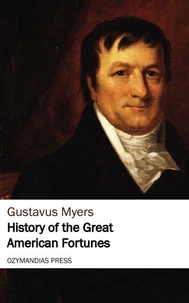
 , qui est-ce ?
