
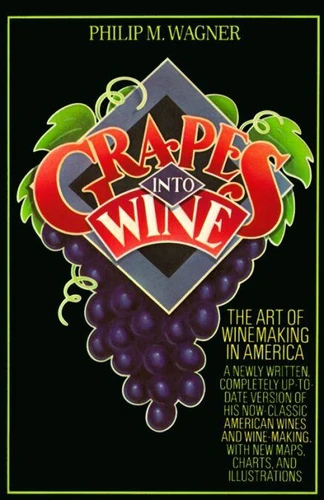
Grapes into Wine
Par :Formats :
Disponible dans votre compte client Decitre ou Furet du Nord dès validation de votre commande. Le format ePub protégé est :
- Compatible avec une lecture sur My Vivlio (smartphone, tablette, ordinateur)
- Compatible avec une lecture sur liseuses Vivlio
- Pour les liseuses autres que Vivlio, vous devez utiliser le logiciel Adobe Digital Edition. Non compatible avec la lecture sur les liseuses Kindle, Remarkable et Sony
- Non compatible avec un achat hors France métropolitaine
 , qui est-ce ?
Notre partenaire de plateforme de lecture numérique où vous retrouverez l'ensemble de vos ebooks gratuitement
Pour en savoir plus sur nos ebooks, consultez notre aide en ligne ici
C'est si simple ! Lisez votre ebook avec l'app Vivlio sur votre tablette, mobile ou ordinateur :

- Nombre de pages336
- FormatePub
- ISBN978-0-307-78428-5
- EAN9780307784285
- Date de parution13/04/2011
- Protection num.Adobe DRM
- Taille10 Mo
- Infos supplémentairesepub
- ÉditeurKnopf
Résumé
As the first to write a basic book in English on winemaking from the winemaker's point of view, Philip Wagner has long been considered an authority on the subject, and his book American Wines and Wine-Making has become a bible for small producers and home winemakers in this country. Now, in this completely new version of that classic, Mr. Wagner takes into account the many dramatic changes that in recent years have revolutionized the American wine scene. With the knowledge that comes from his own experimentation, Mr.
Wagner discusses the new, successful hybrids that have now made it possible to grow wine-producing grapes in far more areas of the United States than used to be considered feasible. Once again he covers all the basic technical information, including recent developments important to the small commercial winery and to the home producer-from the choice of the right vines to the vintage itself, the care of the new wines, and finally the bottling of the wine: red, white, and rosé, sparkling and sweet. There is a new chapter on concentrates for the growing number of people who want to make wine but are not close to a source for suitable grapes, or haven't the space to work with fresh materials.
Mr. Wagner describes what concentrates are, how they are made, what the characteristics are of different types, and what to expect. There are specific instructions on procedure and on the necessary (and unnecessary) equipment. In addition, Philip Wagner's introductory chapters on the evolution of the wine grape, on European winegrowing, and on the contemporary scene throughout the United States provide an excellent guide for the consumer, as does his concluding chapter on tasting and using wine.
Peppered throughout with a wealth of historical and anecdotal material as well as down-to-earth experience-and full of the author's appreciation of wine and winemaking as a way of life-this book is not only a useful guide but delightful and rewarding reading.
Wagner discusses the new, successful hybrids that have now made it possible to grow wine-producing grapes in far more areas of the United States than used to be considered feasible. Once again he covers all the basic technical information, including recent developments important to the small commercial winery and to the home producer-from the choice of the right vines to the vintage itself, the care of the new wines, and finally the bottling of the wine: red, white, and rosé, sparkling and sweet. There is a new chapter on concentrates for the growing number of people who want to make wine but are not close to a source for suitable grapes, or haven't the space to work with fresh materials.
Mr. Wagner describes what concentrates are, how they are made, what the characteristics are of different types, and what to expect. There are specific instructions on procedure and on the necessary (and unnecessary) equipment. In addition, Philip Wagner's introductory chapters on the evolution of the wine grape, on European winegrowing, and on the contemporary scene throughout the United States provide an excellent guide for the consumer, as does his concluding chapter on tasting and using wine.
Peppered throughout with a wealth of historical and anecdotal material as well as down-to-earth experience-and full of the author's appreciation of wine and winemaking as a way of life-this book is not only a useful guide but delightful and rewarding reading.