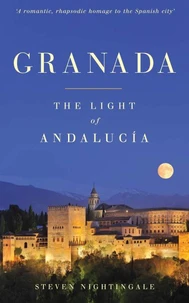
Andalusia: ancient homeland of the mysterious Iberians, birthplace of Roman emperors, seedbed of modern Anarchism, and unmarked gravesite of Spain's greatest lyric poet. Perhaps most importantly, Andalusia is home to the city of Granada, where a hybrid culture composed of Islamic, Jewish, and Christian traditions gave rise to an intellectual vanguard whose achievements can be compared only with those of classical Athens, Ming China, or Renaissance Italy.
Granada resident Steven Nightingale excavates the rich past of his adopted city and its surrounding countryside, finding there a lavish story of utopian ecstasy, political intrigue, and finally anguish. Part of that region in southern Spain named by its Islamic rulers "Al-Andalus, " medieval Granada witnessed a flourishing of poetry in several languages, the first modern translations of Greek philosophy, the birth of algebra, and the construction of architectural masterpieces such as the Alhambra and the Generalife.
Yet with Ferdinand and Isabella's sack of Granada in 1492, regarded as the culmination of the Reconquista, which sought to reclaim Spain for the Vatican, a Catholic mythology of Spain began to erode Granada's centuries-old reputation as an artistically vital haven for multiple ethnic and religious groups. Linking the disastrous afterlife of the Reconquista to the Catholic nationalism of the Franco regime-whose execution of Granadan poet Federico Garcia Lorca symbolizes the suppression of Andalusia's cultural heritage-Nightingale demonstrates the extent to which this Catholic triumphalism also obscured the source of much cultural wealth bequeathed by Al-Andalus to Christian Europe.
Nightingale's own account of the region's medieval zenith recovers the intellectual pageantry and aesthetic splendor of this astounding period in Western history and the marvelous city that was its cultural center.
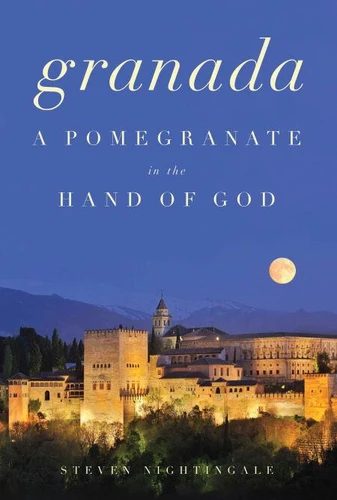
Andalusia: ancient homeland of the mysterious Iberians, birthplace of Roman emperors, seedbed of modern Anarchism, and unmarked gravesite of Spain's greatest lyric poet. Perhaps most importantly, Andalusia is home to the city of Granada, where a hybrid culture composed of Islamic, Jewish, and Christian traditions gave rise to an intellectual vanguard whose achievements can be compared only with those of classical Athens, Ming China, or Renaissance Italy.
Granada resident Steven Nightingale excavates the rich past of his adopted city and its surrounding countryside, finding there a lavish story of utopian ecstasy, political intrigue, and finally anguish. Part of that region in southern Spain named by its Islamic rulers "Al-Andalus, " medieval Granada witnessed a flourishing of poetry in several languages, the first modern translations of Greek philosophy, the birth of algebra, and the construction of architectural masterpieces such as the Alhambra and the Generalife.
Yet with Ferdinand and Isabella's sack of Granada in 1492, regarded as the culmination of the Reconquista, which sought to reclaim Spain for the Vatican, a Catholic mythology of Spain began to erode Granada's centuries-old reputation as an artistically vital haven for multiple ethnic and religious groups. Linking the disastrous afterlife of the Reconquista to the Catholic nationalism of the Franco regime-whose execution of Granadan poet Federico Garcia Lorca symbolizes the suppression of Andalusia's cultural heritage-Nightingale demonstrates the extent to which this Catholic triumphalism also obscured the source of much cultural wealth bequeathed by Al-Andalus to Christian Europe.
Nightingale's own account of the region's medieval zenith recovers the intellectual pageantry and aesthetic splendor of this astounding period in Western history and the marvelous city that was its cultural center.

 , qui est-ce ?