Dr. theol. Yan Suarsana ist Professor für Globalgeschichte des Christentums am Institut für Religionswissenschaft und Religionspädagogik an der Universität Bremen.
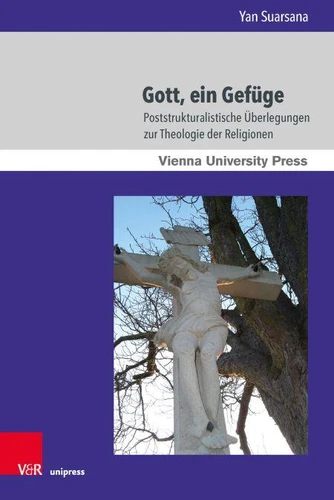
Gott, ein Gefüge. Poststrukturalistische Überlegungen zur Theologie der Religionen
Par :Formats :
Disponible dans votre compte client Decitre ou Furet du Nord dès validation de votre commande. Le format PDF est :
- Compatible avec une lecture sur My Vivlio (smartphone, tablette, ordinateur)
- Compatible avec une lecture sur liseuses Vivlio
- Pour les liseuses autres que Vivlio, vous devez utiliser le logiciel Adobe Digital Edition. Non compatible avec la lecture sur les liseuses Kindle, Remarkable et Sony
 , qui est-ce ?
Notre partenaire de plateforme de lecture numérique où vous retrouverez l'ensemble de vos ebooks gratuitement
Pour en savoir plus sur nos ebooks, consultez notre aide en ligne ici
C'est si simple ! Lisez votre ebook avec l'app Vivlio sur votre tablette, mobile ou ordinateur :

- Nombre de pages275
- FormatPDF
- ISBN978-3-8470-1335-8
- EAN9783847013358
- Date de parution15/11/2021
- Protection num.pas de protection
- Taille6 Mo
- Infos supplémentairespdf
- ÉditeurV&R Unipress
Résumé
Die durch die poststrukturalistische und postkoloniale Theorie geprägten Debatten um den globalen Religionsbegriff, wie sie aktuell in der Religionswissenschaft geführt werden, haben zum Teil auch in der Theologie zu einer Neureflexion althergebrachter Konzepte geführt. Der vorliegende Band hat zum Ziel, diese Debatten zu bündeln und für die Theologie der Religionen fruchtbar zu machen. Dabei werden zum einen zentrale Kategorien wie Wahrheit, Universalität oder Religion einer Dekonstruktion unterzogen, um diese in ihrer historischen Bedingtheit sowie ihrer Verflechtung mit gesellschaftlichen Diskursen sichtbar zu machen.
Zum anderen werden neue Räume des Sagbaren skizziert, die als Grundlage einer alternativen, nicht-essentialistischen Form religionstheologischen Sprechens dienen können. This book extends the contemporary debate on the global concept of religion, conducted in the context of religious studies, to the field of the theology of religions. In applying poststructuralist and postcolonial perspectives, it seeks to deconstruct central categories such as truth, universality, or religion, in order to contextualize them by making transparent their historical genealogy and entanglement with political, social, and scientific discourses.
Further, it aims to outline new areas of thinking, which can serve as the experimental basis of an alternative, non-essentialist form of theology (of religions).
Zum anderen werden neue Räume des Sagbaren skizziert, die als Grundlage einer alternativen, nicht-essentialistischen Form religionstheologischen Sprechens dienen können. This book extends the contemporary debate on the global concept of religion, conducted in the context of religious studies, to the field of the theology of religions. In applying poststructuralist and postcolonial perspectives, it seeks to deconstruct central categories such as truth, universality, or religion, in order to contextualize them by making transparent their historical genealogy and entanglement with political, social, and scientific discourses.
Further, it aims to outline new areas of thinking, which can serve as the experimental basis of an alternative, non-essentialist form of theology (of religions).