SOLDES
Jusqu'à -70% sur une sélection d'articles*

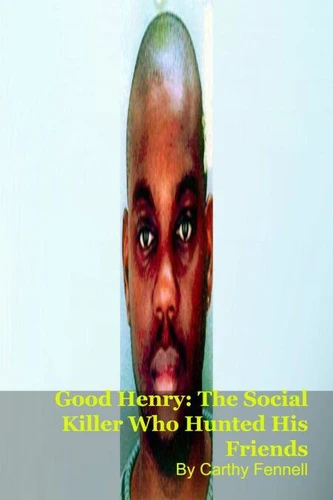
Good Henry: The Social Killer Who Hunted His Friends
Par :Formats :
Disponible dans votre compte client Decitre ou Furet du Nord dès validation de votre commande. Le format ePub est :
- Compatible avec une lecture sur My Vivlio (smartphone, tablette, ordinateur)
- Compatible avec une lecture sur liseuses Vivlio
- Pour les liseuses autres que Vivlio, vous devez utiliser le logiciel Adobe Digital Edition. Non compatible avec la lecture sur les liseuses Kindle, Remarkable et Sony
 , qui est-ce ?
Notre partenaire de plateforme de lecture numérique où vous retrouverez l'ensemble de vos ebooks gratuitement
Pour en savoir plus sur nos ebooks, consultez notre aide en ligne ici
C'est si simple ! Lisez votre ebook avec l'app Vivlio sur votre tablette, mobile ou ordinateur :

- FormatePub
- ISBN8233318610
- EAN9798233318610
- Date de parution17/03/2026
- Protection num.pas de protection
- Infos supplémentairesepub
- ÉditeurLinda Balsamo
Résumé
Good Henry: The Social Killer Who Hunted His FriendsBetween March 1990 and March 1994, Henry Louis Wallace murdered eleven women across South Carolina and North Carolina. He was not a stranger lurking in the shadows. He was a coworker, a neighbour, a friend, a man whose victims opened their doors to him willingly because they had every reason to trust him and none to fear him. Good Henry reconstructs the full arc of Wallace's life and crimes, from the abusive childhood in Barnwell, South Carolina, that shaped his psychology, through the years of escalating violence in Charlotte that a catastrophically under-resourced police department failed to connect into a pattern, to the trial that sentenced him to nine deaths he has never faced.
This is not only the story of one man's predation. It is the story of a city that failed its women, systematically, structurally, and along lines of race and class that made the deaths of young Black working-class women invisible to the institutions nominally responsible for protecting them. Drawing on court records, criminological research, and the testimony of survivors and victims' families, this book insists that the eleven women Wallace killed deserve to be remembered as people, not as entries in a case file, and that the society which allowed him to kill for four years owes them a reckoning that has never fully arrived.
This is not only the story of one man's predation. It is the story of a city that failed its women, systematically, structurally, and along lines of race and class that made the deaths of young Black working-class women invisible to the institutions nominally responsible for protecting them. Drawing on court records, criminological research, and the testimony of survivors and victims' families, this book insists that the eleven women Wallace killed deserve to be remembered as people, not as entries in a case file, and that the society which allowed him to kill for four years owes them a reckoning that has never fully arrived.