SOLDES
Jusqu'à -70% sur une sélection d'articles*

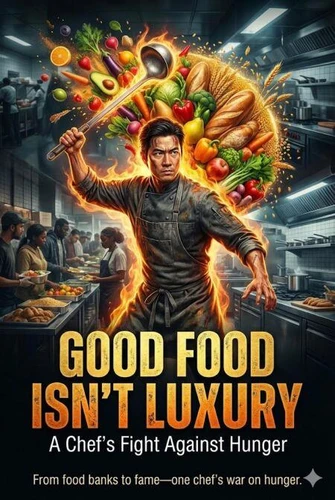
Good Food Isn't Luxury: A Chef's Fight Against Hunger. From food banks to fame—one chef's war on hunger
Par :Formats :
Disponible dans votre compte client Decitre ou Furet du Nord dès validation de votre commande. Le format ePub est :
- Compatible avec une lecture sur My Vivlio (smartphone, tablette, ordinateur)
- Compatible avec une lecture sur liseuses Vivlio
- Pour les liseuses autres que Vivlio, vous devez utiliser le logiciel Adobe Digital Edition. Non compatible avec la lecture sur les liseuses Kindle, Remarkable et Sony
 , qui est-ce ?
Notre partenaire de plateforme de lecture numérique où vous retrouverez l'ensemble de vos ebooks gratuitement
Pour en savoir plus sur nos ebooks, consultez notre aide en ligne ici
C'est si simple ! Lisez votre ebook avec l'app Vivlio sur votre tablette, mobile ou ordinateur :

- Nombre de pages213
- FormatePub
- ISBN978-3-565-13434-2
- EAN9783565134342
- Date de parution18/12/2025
- Protection num.pas de protection
- Taille354 Ko
- Infos supplémentairesepub
- ÉditeurEmphaloz Publishing House
Résumé
He did not set out to become a celebrity chef. He just wanted people to eat. Volunteering at a food bank on the edge of a struggling estate, he started by turning donated tins and bruised vegetables into hot meals that tasted like care, not charity. Word spread about "the guy who could make something out of nothing, " and soon the queue stretched around the block.
This memoir follows a reluctant chef from church halls and community centres to pop-up suppers, TV studios, and finally his own restaurant-built on a radical idea: good food is a right, not a luxury.
Along the way, he learns to navigate food waste politics, sceptical donors, hostile tabloids, and the uncomfortable truth that fame can change a message as quickly as it amplifies it. Inside the kitchen, he finds chosen family among volunteers, ex-offenders, refugees, and single mums who become his first staff. Outside, he confronts the stigma of poverty, the hypocrisy of a food-obsessed culture that scrolls past hunger, and his own impostor syndrome as "just a lad from a council estate" suddenly asked to sit on panels with Michelin stars. Told with warmth, blunt honesty, and the dark humour of service life, this is a story about dignity, class, and what it means to build a business that refuses to forget the people at the back of the queue.
Along the way, he learns to navigate food waste politics, sceptical donors, hostile tabloids, and the uncomfortable truth that fame can change a message as quickly as it amplifies it. Inside the kitchen, he finds chosen family among volunteers, ex-offenders, refugees, and single mums who become his first staff. Outside, he confronts the stigma of poverty, the hypocrisy of a food-obsessed culture that scrolls past hunger, and his own impostor syndrome as "just a lad from a council estate" suddenly asked to sit on panels with Michelin stars. Told with warmth, blunt honesty, and the dark humour of service life, this is a story about dignity, class, and what it means to build a business that refuses to forget the people at the back of the queue.