SOLDES
Jusqu'à -70% sur une sélection d'articles*

Nouveauté
God Without Gloves: A Meditation on Evgraf Sorokin's "The Spanish Beggar Girl". The Art of Living
Par :Formats :
Disponible dans votre compte client Decitre ou Furet du Nord dès validation de votre commande. Le format ePub est :
- Compatible avec une lecture sur My Vivlio (smartphone, tablette, ordinateur)
- Compatible avec une lecture sur liseuses Vivlio
- Pour les liseuses autres que Vivlio, vous devez utiliser le logiciel Adobe Digital Edition. Non compatible avec la lecture sur les liseuses Kindle, Remarkable et Sony
 , qui est-ce ?
Notre partenaire de plateforme de lecture numérique où vous retrouverez l'ensemble de vos ebooks gratuitement
Pour en savoir plus sur nos ebooks, consultez notre aide en ligne ici
C'est si simple ! Lisez votre ebook avec l'app Vivlio sur votre tablette, mobile ou ordinateur :

- FormatePub
- ISBN8235706514
- EAN9798235706514
- Date de parution29/06/2026
- Protection num.pas de protection
- Infos supplémentairesepub
- ÉditeurIoakim Ioakim
Résumé
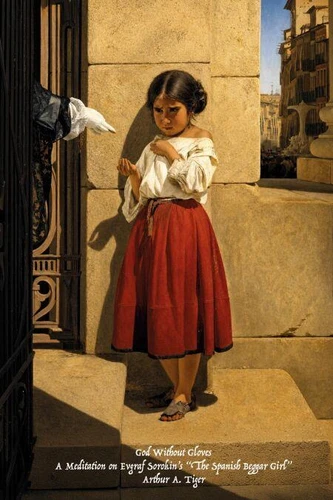
A gloved hand reaches out of the dark with a coin for a beggar girl. It will not touch her. In 1852 the Russian painter Evgraf Sorokin painted a small girl begging at the door of a rich house in Madrid. From the darkness behind a half-open iron door, a gloved hand holds out a coin. The giver has no face. The hand gives, and stays clean. Arthur Tiger was stopped cold by this painting in a Moscow gallery and could not let it go.
Years later it vanished from its corner, and the letters he wrote went unanswered. God Without Gloves grew out of that long, unfinished looking. The book moves in three slow movements. First it stands before the canvas and the icon painter who made it, a man who spent his life painting saints. Then it lingers on every charged detail: the glove, the bare shoulder, the downcast gaze, the threshold, the single thread of red.
Finally it turns to the question the picture will not release. What do we really do when we give? Is a coin through a half-open door an act of love, or a way to help without drawing near, to keep our hands clean and the wall standing? Setting the painting beside the Gospels and the letters of Paul, the book asks what mercy becomes when it keeps its distance from a God who touched lepers and made himself poor.
This is not a comfortable book, and it does not flatter the reader. At its turning point it argues, in earnest, against its own verdict. It offers no tidy resolution. It only makes certain that, once you have seen the gloved hand, you cannot quite walk past the next outstretched one. A short, unhurried meditation for readers who think at the crossroads of art, faith and conscience.
Years later it vanished from its corner, and the letters he wrote went unanswered. God Without Gloves grew out of that long, unfinished looking. The book moves in three slow movements. First it stands before the canvas and the icon painter who made it, a man who spent his life painting saints. Then it lingers on every charged detail: the glove, the bare shoulder, the downcast gaze, the threshold, the single thread of red.
Finally it turns to the question the picture will not release. What do we really do when we give? Is a coin through a half-open door an act of love, or a way to help without drawing near, to keep our hands clean and the wall standing? Setting the painting beside the Gospels and the letters of Paul, the book asks what mercy becomes when it keeps its distance from a God who touched lepers and made himself poor.
This is not a comfortable book, and it does not flatter the reader. At its turning point it argues, in earnest, against its own verdict. It offers no tidy resolution. It only makes certain that, once you have seen the gloved hand, you cannot quite walk past the next outstretched one. A short, unhurried meditation for readers who think at the crossroads of art, faith and conscience.