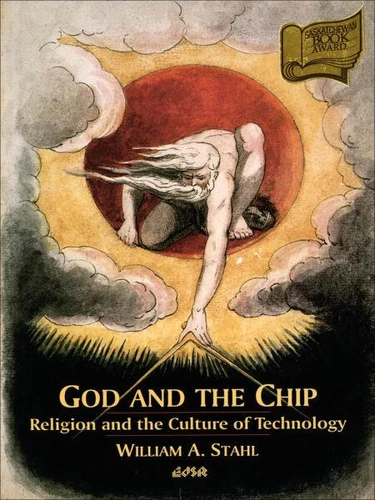



God and the Chip. Religion and the Culture of Technology

Par : William A. Stahl
Offrir maintenant
Ou planifier dans votre panier
Disponible dans votre compte client Decitre ou Furet du Nord dès validation de votre commande. Le format ePub est :
  • Compatible avec une lecture sur My Vivlio (smartphone, tablette, ordinateur)
  • Compatible avec une lecture sur liseuses Vivlio
  • Pour les liseuses autres que Vivlio, vous devez utiliser le logiciel Adobe Digital Edition. Non compatible avec la lecture sur les liseuses Kindle, Remarkable et Sony
Logo Vivlio, qui est-ce ?

Notre partenaire de plateforme de lecture numérique où vous retrouverez l'ensemble de vos ebooks gratuitement

Pour en savoir plus sur nos ebooks, consultez notre aide en ligne ici
C'est si simple ! Lisez votre ebook avec l'app Vivlio sur votre tablette, mobile ou ordinateur :
Google PlayApp Store
  • Nombre de pages194
  • FormatePub
  • ISBN978-1-55458-793-3
  • EAN9781554587933
  • Date de parution03/08/2009
  • Protection num.Digital Watermarking
  • Taille3 Mo
  • Infos supplémentairesepub
  • ÉditeurWilfrid Laurier University Press

Résumé

Our ancestors saw the material world as alive, and they often personified nature. Today we claim to be realists. But in reality we are not paying attention to the symbols and myths hidden in technology. Beneath much of our talk about computers and the Internet, claims William A. Stahl, is an unacknowledged mysticism, an implicit religion. By not acknowledging this mysticism, we have become critically short of ethical and intellectual resources with which to understand and confront changes brought on by technology.
William A. Stahl is a professor of sociology at Luther College, University of Regina, who specializes not only in the sociology of religion but also in science, technology, and society, and who holds a degree in theology. He is a regional director for the Canadian Network on Science and Religion. Between 1989 and 1993 he was a senior researcher on an international, interdisciplinary team that developed a design model for computerizing the university system in India.
His class on religion and the sciences won an award from the John Templeton Foundation's Science and Religion Course Program