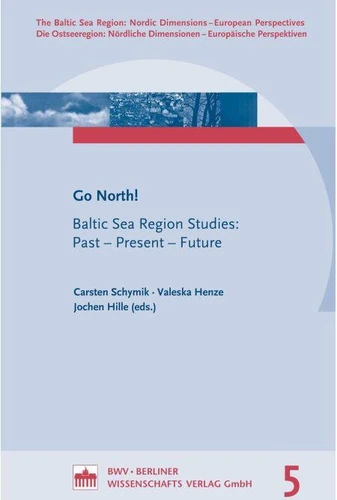
Go North! was the programmatic title of an international conference on Baltic Sea Region Studies that took place at Humboldt University of Berlin from April 4-6, 2005. It was hosted by the BalticStudyNet project, which is part of the European Union's Erasmus Mundus programme for the global promotion of European higher education. In order to discuss the past, present and future of Baltic Sea Region Studies, the Berlin conference brought together about fifty government representatives and scholars from all Baltic Sea Region countries, including Russia, as well as from the United Kingdom, Switzerland, the USA, Canada, Ukraine and Kyrgyzstan.
The basic idea of the Go North! conference was to encourage a fundamental change of perspective - away from intra-regional and towards extra-regional and truly global approaches to the Baltic Sea Region: How is the Baltic Sea region perceived when viewed, let's say, from Australia? What, if anything, would a Chinese student find typical, extraordinary, or even unique when looking at the region? Why should a scholar from Mexico, South Africa or India wish to do research in and/or about the Baltic Sea Region? Consequently, third country views on Europe's North and the Baltic Sea Region were a feature of many of the presentations and panel discussions during the conference, which are documented in this volume.
Go North! was the programmatic title of an international conference on Baltic Sea Region Studies that took place at Humboldt University of Berlin from April 4-6, 2005. It was hosted by the BalticStudyNet project, which is part of the European Union's Erasmus Mundus programme for the global promotion of European higher education. In order to discuss the past, present and future of Baltic Sea Region Studies, the Berlin conference brought together about fifty government representatives and scholars from all Baltic Sea Region countries, including Russia, as well as from the United Kingdom, Switzerland, the USA, Canada, Ukraine and Kyrgyzstan.
The basic idea of the Go North! conference was to encourage a fundamental change of perspective - away from intra-regional and towards extra-regional and truly global approaches to the Baltic Sea Region: How is the Baltic Sea region perceived when viewed, let's say, from Australia? What, if anything, would a Chinese student find typical, extraordinary, or even unique when looking at the region? Why should a scholar from Mexico, South Africa or India wish to do research in and/or about the Baltic Sea Region? Consequently, third country views on Europe's North and the Baltic Sea Region were a feature of many of the presentations and panel discussions during the conference, which are documented in this volume.


 , qui est-ce ?