SOLDES
Jusqu'à -70% sur une sélection d'articles*

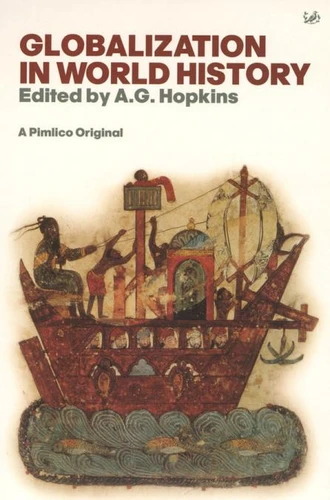
Globalisation In World History
Par :Formats :
Disponible dans votre compte client Decitre ou Furet du Nord dès validation de votre commande. Le format ePub protégé est :
- Compatible avec une lecture sur My Vivlio (smartphone, tablette, ordinateur)
- Compatible avec une lecture sur liseuses Vivlio
- Pour les liseuses autres que Vivlio, vous devez utiliser le logiciel Adobe Digital Edition. Non compatible avec la lecture sur les liseuses Kindle, Remarkable et Sony
- Non compatible avec un achat hors France métropolitaine
 , qui est-ce ?
Notre partenaire de plateforme de lecture numérique où vous retrouverez l'ensemble de vos ebooks gratuitement
Pour en savoir plus sur nos ebooks, consultez notre aide en ligne ici
C'est si simple ! Lisez votre ebook avec l'app Vivlio sur votre tablette, mobile ou ordinateur :

- Nombre de pages288
- FormatePub
- ISBN978-1-4464-2682-1
- EAN9781446426821
- Date de parution22/02/2011
- Protection num.Adobe DRM
- Infos supplémentairesepub
- ÉditeurVintage Digital
Résumé
Globalisation was the buzzword of the 1990s; it promises to become even more important in the first decade of the new century. There is now a flood of literature on the economics, politics and sociology of globalization, and regular commentary in the serious daily and weekly press. Virtually all of this discussion makes assumptions, and frequently explicit claims, about the novelty of globalisation.
According to one view, the globalisation is a new phenomenon that can be dated from the 1980s. A second view holds that globalisation has a long history that can be traced back to the nineteenth century, if not earlier. The importance of these themes scarcely needs elaborating. Yet they have still to attract significant attention from historians. This volume is the first by a team of historians to address these issues.
Globalisation in World History has two distinctive features. First, it offers a categorisation of types and stages of globalisation that existed before the late twentieth century, No such taxonomy exists at present. Secondly, it emphasises a feature that the current debate greatly underestimates: the fact that globalisation has non-Western as well as Western origins. Globalisation is much more than the 'rise of the West' presented in new terminology.
The contributors bring their expertise to bear on themes that give prominence to China, South Asia, Africa and the world of Islam as well as to Europe and the United States, and span the last three centuries while also showing an awareness of more distant antecedents. The result is a coherent and thought-provoking collection of essays. Globalisation will become a major theme of historical research during the next decade; this book will help to set the new agenda.
According to one view, the globalisation is a new phenomenon that can be dated from the 1980s. A second view holds that globalisation has a long history that can be traced back to the nineteenth century, if not earlier. The importance of these themes scarcely needs elaborating. Yet they have still to attract significant attention from historians. This volume is the first by a team of historians to address these issues.
Globalisation in World History has two distinctive features. First, it offers a categorisation of types and stages of globalisation that existed before the late twentieth century, No such taxonomy exists at present. Secondly, it emphasises a feature that the current debate greatly underestimates: the fact that globalisation has non-Western as well as Western origins. Globalisation is much more than the 'rise of the West' presented in new terminology.
The contributors bring their expertise to bear on themes that give prominence to China, South Asia, Africa and the world of Islam as well as to Europe and the United States, and span the last three centuries while also showing an awareness of more distant antecedents. The result is a coherent and thought-provoking collection of essays. Globalisation will become a major theme of historical research during the next decade; this book will help to set the new agenda.