SOLDES
Jusqu'à -70% sur une sélection d'articles*

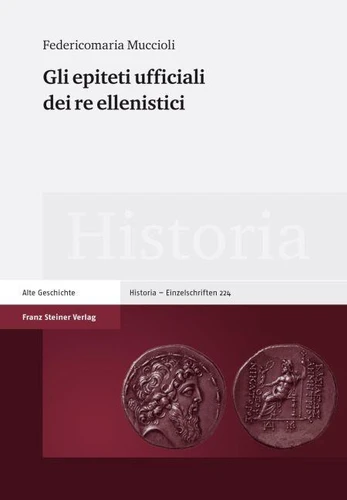
Gli epiteti ufficiali dei re ellenistici
Par :Formats :
Disponible dans votre compte client Decitre ou Furet du Nord dès validation de votre commande. Le format PDF est :
- Compatible avec une lecture sur My Vivlio (smartphone, tablette, ordinateur)
- Compatible avec une lecture sur liseuses Vivlio
- Pour les liseuses autres que Vivlio, vous devez utiliser le logiciel Adobe Digital Edition. Non compatible avec la lecture sur les liseuses Kindle, Remarkable et Sony
 , qui est-ce ?
Notre partenaire de plateforme de lecture numérique où vous retrouverez l'ensemble de vos ebooks gratuitement
Pour en savoir plus sur nos ebooks, consultez notre aide en ligne ici
C'est si simple ! Lisez votre ebook avec l'app Vivlio sur votre tablette, mobile ou ordinateur :

- Nombre de pages562
- FormatPDF
- ISBN978-3-515-10383-1
- EAN9783515103831
- Date de parution04/02/2013
- Protection num.Digital Watermarking
- Taille4 Mo
- Infos supplémentairespdf
- ÉditeurFranz Steiner
Résumé
L'autore esamina uno degli aspetti più importanti (e spesso trascurati) dell'età ellenistica: gli epiteti ufficiali dei sovrani e dei loro familiari (con attenzione anche alla titolatura regia nel suo complesso, agli epiteti non ufficiali e ai soprannomi), nel contesto più generale dei cambiamenti politici e religiosi in quell'epoca. Il e-book è diviso in tre parti, precedute da un'introduzione di carattere metodologico e con alcuni confronti con realtà della Grecia arcaica e classica.
La prima parte offre un quadro storico incentrato sull'uso degli epiteti per Alessandro Magno e i suoi successori. Segue un'analisi dei singoli titoli nelle diverse dinastie (in alcuni casi, fino all'impero romano). Nella terza parte sono invece indagati il rapporto tra gli epiteti e la propaganda multiculturale nelle regalità ellenistiche e l'elaborazione dell'immagine ideale del sovrano nella tradizione antica. Completano il volume le conclusioni, due appendici, tabelle cronologiche, un'ampia bibliografia e due indici. --- The author explores one of the most important (and so far neglected) topics of Hellenism: the official epithets of kings and relatives (with reference even to the whole royal titulature and to unofficial epithets and nicknames), in the wider context of political and religious changes during the Hellenistic times.
The e-book is divided mainly in three parts, with an introduction which explains various methodological issues and provides the reader with some parallel examples in Greek archaic and classical periods. The first part offers a historical overview of the development of the use of the epithets for Alexander the Great and his successors. The second part sheds some light on each title used in every single dynasty (in some cases, down into Roman imperial times).
The third part examines the interconnection between epithets and royal multicultural propaganda under the Hellenistic kingdoms, and the construction of an ideal figure of the king in ancient authors. The e-book includes conclusions, two appendices, chronological tables, an extended bibliography and two indexes.
La prima parte offre un quadro storico incentrato sull'uso degli epiteti per Alessandro Magno e i suoi successori. Segue un'analisi dei singoli titoli nelle diverse dinastie (in alcuni casi, fino all'impero romano). Nella terza parte sono invece indagati il rapporto tra gli epiteti e la propaganda multiculturale nelle regalità ellenistiche e l'elaborazione dell'immagine ideale del sovrano nella tradizione antica. Completano il volume le conclusioni, due appendici, tabelle cronologiche, un'ampia bibliografia e due indici. --- The author explores one of the most important (and so far neglected) topics of Hellenism: the official epithets of kings and relatives (with reference even to the whole royal titulature and to unofficial epithets and nicknames), in the wider context of political and religious changes during the Hellenistic times.
The e-book is divided mainly in three parts, with an introduction which explains various methodological issues and provides the reader with some parallel examples in Greek archaic and classical periods. The first part offers a historical overview of the development of the use of the epithets for Alexander the Great and his successors. The second part sheds some light on each title used in every single dynasty (in some cases, down into Roman imperial times).
The third part examines the interconnection between epithets and royal multicultural propaganda under the Hellenistic kingdoms, and the construction of an ideal figure of the king in ancient authors. The e-book includes conclusions, two appendices, chronological tables, an extended bibliography and two indexes.