SOLDES
Jusqu'à -70% sur une sélection d'articles*

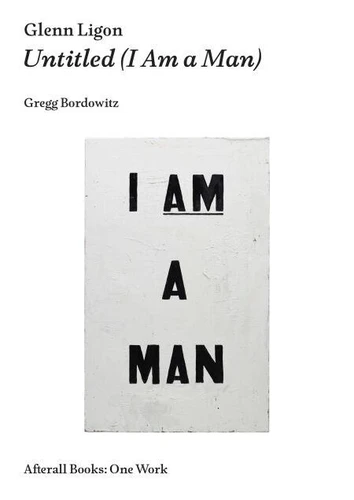
Glenn Ligon Untitled (I Am a Man) /anglais
Par :Formats :
Disponible dans votre compte client Decitre ou Furet du Nord dès validation de votre commande. Le format ePub protégé est :
- Compatible avec une lecture sur My Vivlio (smartphone, tablette, ordinateur)
- Compatible avec une lecture sur liseuses Vivlio
- Pour les liseuses autres que Vivlio, vous devez utiliser le logiciel Adobe Digital Edition. Non compatible avec la lecture sur les liseuses Kindle, Remarkable et Sony
- Non compatible avec un achat hors France métropolitaine
 , qui est-ce ?
Notre partenaire de plateforme de lecture numérique où vous retrouverez l'ensemble de vos ebooks gratuitement
Pour en savoir plus sur nos ebooks, consultez notre aide en ligne ici
C'est si simple ! Lisez votre ebook avec l'app Vivlio sur votre tablette, mobile ou ordinateur :

- Nombre de pages96
- FormatePub
- ISBN978-1-84638-194-2
- EAN9781846381942
- Date de parution09/07/2019
- Protection num.Adobe DRM
- Taille969 Ko
- Infos supplémentairesepub
- ÉditeurAfterall Books
Résumé
An illustrated examination of Glenn Ligon's iconic Untitled (I Am a Man) (1988)-a quotation, an appropriated text turned into an artifact. The iconic work Untitled (I Am a Man) (1988) by the important contemporary American artist Glenn Ligon is a quotation, an appropriated text turned into an artifact. The National Gallery of Art in Washington presents the work as a "representation-a signifier-of the actual signs carried by 1, 300 striking African American sanitation workers in Memphis, made famous by Ernest Withers' 1968 photographs." In this illustrated study of the work, Gregg Bordowitz takes the National Gallery's presentation as his starting point, considering the museum's juxtaposition of Untitled (I Am a Man) and the ca.
1935 sculpture, Schoolteacher, by William Edmondson, and the relation of the two terms, "markers" and "signs."After closely examining the canvas itself, its textures, brushwork, and structure, Bordowitz presents a theoretical framework that draws on the work of American philosopher Charles Sanders Peirce and his theory of Firstness, Secondness, and Thirdness. He makes a case for Thirdness as a function, operation, or law of meaning-making, not limited by the gender, age, ethnicity, race, class, or personal history of the viewer.
Bordowitz goes on to examine Ligon's work in terms of the representation of self, race, and gender, focusing on three series: Profile Series (1990-91), Narratives, and Runaways (both 1993). He cites such historical figures as Sojourner Truth and her famous 1851 speech, "Ain't I a Woman?" as well as influences ranging from Bo Diddley's 1955 song, "I'm a Man" to the cultural theories of Stuart Hall.
1935 sculpture, Schoolteacher, by William Edmondson, and the relation of the two terms, "markers" and "signs."After closely examining the canvas itself, its textures, brushwork, and structure, Bordowitz presents a theoretical framework that draws on the work of American philosopher Charles Sanders Peirce and his theory of Firstness, Secondness, and Thirdness. He makes a case for Thirdness as a function, operation, or law of meaning-making, not limited by the gender, age, ethnicity, race, class, or personal history of the viewer.
Bordowitz goes on to examine Ligon's work in terms of the representation of self, race, and gender, focusing on three series: Profile Series (1990-91), Narratives, and Runaways (both 1993). He cites such historical figures as Sojourner Truth and her famous 1851 speech, "Ain't I a Woman?" as well as influences ranging from Bo Diddley's 1955 song, "I'm a Man" to the cultural theories of Stuart Hall.