Guy de la Bédoyère has written extensively on the ancient world over the last thirty years, most recently Gladius: Living, Fighting and Dying in the Roman Army (which was described by the Sunday Times as 'highly enjoyable') and Pharaohs of the Sun: How Egypt's Despots and Dreamers drove the Rise and Fall of Tutankhamun's Dynasty. He was part of Channel 4's archaeology series Time Team for fifteen years and has degrees from Durham, London and University College.
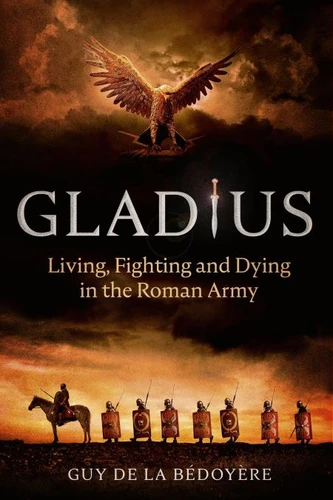
Gladius. Living, Fighting and Dying in the Roman Army
Par :Formats :
Disponible dans votre compte client Decitre ou Furet du Nord dès validation de votre commande. Le format ePub protégé est :
- Compatible avec une lecture sur My Vivlio (smartphone, tablette, ordinateur)
- Compatible avec une lecture sur liseuses Vivlio
- Pour les liseuses autres que Vivlio, vous devez utiliser le logiciel Adobe Digital Edition. Non compatible avec la lecture sur les liseuses Kindle, Remarkable et Sony
- Non compatible avec un achat hors France métropolitaine
 , qui est-ce ?
Notre partenaire de plateforme de lecture numérique où vous retrouverez l'ensemble de vos ebooks gratuitement
Pour en savoir plus sur nos ebooks, consultez notre aide en ligne ici
C'est si simple ! Lisez votre ebook avec l'app Vivlio sur votre tablette, mobile ou ordinateur :

- Nombre de pages528
- FormatePub
- ISBN978-1-4087-1238-2
- EAN9781408712382
- Date de parution04/11/2020
- Protection num.Adobe DRM
- Infos supplémentairesepub
- ÉditeurLittle, Brown Book Group
Résumé
The Roman army was the greatest fighting machine the ancient world produced. The Roman Empire depended on soldiers not just to win its wars, defend its frontiers and control the seas but also to act as the engine of the state. Roman legionaries and auxiliaries came from across the Roman world and beyond. They served as tax collectors, policemen, surveyors, civil engineers and, if they survived, in retirement as civic worthies, craftsmen and politicians.
Some even rose to become emperors. Gladius takes the reader right into the heart of what it meant to be a part of the Roman army through the words of Roman historians, and those of the men themselves through their religious dedications, tombstones, and even private letters and graffiti. Guy de la Bédoyère throws open a window on how the men, their wives and their children lived, from bleak frontier garrisons to guarding the emperor in Rome, enjoying a ringside seat to history fighting the emperors' wars, mutinying over pay, marching in triumphs, throwing their weight around in city streets, and enjoying esteem in honorable retirement.
Some even rose to become emperors. Gladius takes the reader right into the heart of what it meant to be a part of the Roman army through the words of Roman historians, and those of the men themselves through their religious dedications, tombstones, and even private letters and graffiti. Guy de la Bédoyère throws open a window on how the men, their wives and their children lived, from bleak frontier garrisons to guarding the emperor in Rome, enjoying a ringside seat to history fighting the emperors' wars, mutinying over pay, marching in triumphs, throwing their weight around in city streets, and enjoying esteem in honorable retirement.