SOLDES
Jusqu'à -70% sur une sélection d'articles*

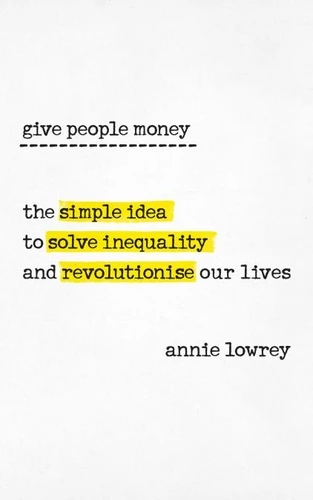
Give People Money. The simple idea to solve inequality and revolutionise our lives
Par :Formats :
Disponible dans votre compte client Decitre ou Furet du Nord dès validation de votre commande. Le format ePub protégé est :
- Compatible avec une lecture sur My Vivlio (smartphone, tablette, ordinateur)
- Compatible avec une lecture sur liseuses Vivlio
- Pour les liseuses autres que Vivlio, vous devez utiliser le logiciel Adobe Digital Edition. Non compatible avec la lecture sur les liseuses Kindle, Remarkable et Sony
- Non compatible avec un achat hors France métropolitaine
 , qui est-ce ?
Notre partenaire de plateforme de lecture numérique où vous retrouverez l'ensemble de vos ebooks gratuitement
Pour en savoir plus sur nos ebooks, consultez notre aide en ligne ici
C'est si simple ! Lisez votre ebook avec l'app Vivlio sur votre tablette, mobile ou ordinateur :

- Nombre de pages288
- FormatePub
- ISBN978-0-7535-4579-9
- EAN9780753545799
- Date de parution12/07/2018
- Protection num.Adobe DRM
- Infos supplémentairesepub
- ÉditeurVirgin Digital
Résumé
Shortlisted for the 2018 Financial Times and McKinsey Business Book of the Year Award!Surely just giving people money couldn't work. Or could it?Imagine if every month the government deposited £1000 in your bank account, with no strings attached and nothing expected in return. It sounds crazy, but Universal Basic Income (UBI) has become one of the most influential policy ideas of our time, backed by thinkers on both the left and the right.
The founder of Facebook, Obama's chief economist, governments from Canada to Finland are all seriously debating some form of UBI. In this sparkling and provocative book, economics writer Annie Lowrey looks at the global UBI movement. She travels to Kenya to see how UBI is lifting the poorest people on earth out of destitution, and India to see how inefficient government programs are failing the poor.
She visits South Korea to interrogate UBI's intellectual pedigree, and Silicon Valley to meet the tech titans financing UBI pilots in the face of advanced artificial intelligence and little need for human labour. She also examines at the challenges the movement faces: contradictory aims, uncomfortable costs, and most powerfully, the entrenched belief that no one should get something for nothing. The UBI movement is not just an economic policy -- it also calls into question our deepest intuitions about what we owe each other and what activities we should reward and value as a society.
The founder of Facebook, Obama's chief economist, governments from Canada to Finland are all seriously debating some form of UBI. In this sparkling and provocative book, economics writer Annie Lowrey looks at the global UBI movement. She travels to Kenya to see how UBI is lifting the poorest people on earth out of destitution, and India to see how inefficient government programs are failing the poor.
She visits South Korea to interrogate UBI's intellectual pedigree, and Silicon Valley to meet the tech titans financing UBI pilots in the face of advanced artificial intelligence and little need for human labour. She also examines at the challenges the movement faces: contradictory aims, uncomfortable costs, and most powerfully, the entrenched belief that no one should get something for nothing. The UBI movement is not just an economic policy -- it also calls into question our deepest intuitions about what we owe each other and what activities we should reward and value as a society.