
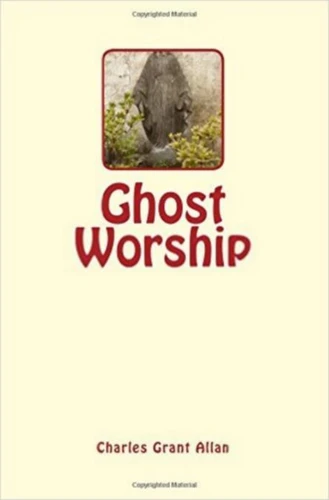
Ghost Worship
Par :Formats :
Disponible dans votre compte client Decitre ou Furet du Nord dès validation de votre commande. Le format Multi-format est :
- Pour les liseuses autres que Vivlio, vous devez utiliser le logiciel Adobe Digital Edition. Non compatible avec la lecture sur les liseuses Kindle, Remarkable et Sony
 , qui est-ce ?
Notre partenaire de plateforme de lecture numérique où vous retrouverez l'ensemble de vos ebooks gratuitement
Pour en savoir plus sur nos ebooks, consultez notre aide en ligne ici
C'est si simple ! Lisez votre ebook avec l'app Vivlio sur votre tablette, mobile ou ordinateur :

- FormatMulti-format
- ISBN978-2-36659-297-9
- EAN9782366592979
- Date de parution18/10/2016
- Protection num.pas de protection
- Infos supplémentairesMulti-Format
- ÉditeurLE MONO (EDITIONS)
Résumé
The ghost in fact plays in the ideas of early man the same part that guano and phosphates play today in the ideas of the educated scientific farmer... Furthermore, another connection may be shown to exist between plants or trees and ghosts. We know that it is a frequent practice deliberately to put in herbs, shrubs, or trees on the graves of the dead. How far back in history or in savage life this practice may extend I am unfortunately not in a position to state.
In Roman Catholic countries, however, the planting of flowers on the graves of the dead takes place usually on the jour des morts (all saints' day), a custom which would seem to argue for it an immense antiquity; for though it is usual among Catholics to explain the jour des morts as a féte of comparatively recent origin, definitely introduced by a particular saint at a particular period, its analogy to similar celebrations elsewhere shows that it is really a surviving relic of a very ancient form of Manes worship.
In Algeria, I observed, the Arab women went on Fridays to plant flowers on the graves of their immediate dead; and the same point is noted about the same place by Miss Seguin. The koubbas, or little dome-shaped tombs of saints, so common throughout North Africa, are almost always inclosed by a low stone wall, which marks off the temenos, and are usually overshadowed by palm trees deliberately planted there...
In Roman Catholic countries, however, the planting of flowers on the graves of the dead takes place usually on the jour des morts (all saints' day), a custom which would seem to argue for it an immense antiquity; for though it is usual among Catholics to explain the jour des morts as a féte of comparatively recent origin, definitely introduced by a particular saint at a particular period, its analogy to similar celebrations elsewhere shows that it is really a surviving relic of a very ancient form of Manes worship.
In Algeria, I observed, the Arab women went on Fridays to plant flowers on the graves of their immediate dead; and the same point is noted about the same place by Miss Seguin. The koubbas, or little dome-shaped tombs of saints, so common throughout North Africa, are almost always inclosed by a low stone wall, which marks off the temenos, and are usually overshadowed by palm trees deliberately planted there...