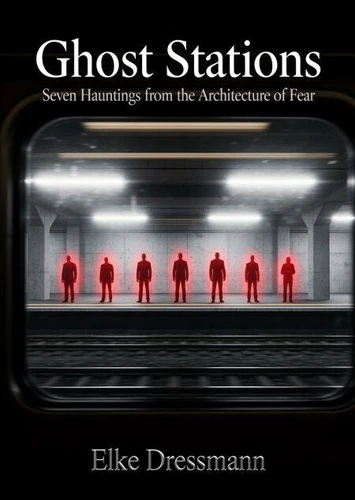
In the dead hours of the night, trains pass through stations where no one is supposed to be. In *Ghost Stations: Seven Hauntings from the Architecture of Fear*, author Elke Dressmann takes readers deep into the forgotten spaces of modern urban life - the sealed platforms, the locked corridors, the transit hubs that history has quietly abandoned - and asks what might be waiting in the silence left behind.
This collection of seven interconnected ghost stories is built on a brilliantly unsettling premise: that the architecture of fear is not imagined, but inherited.
Each story unfolds within a real type of space - subway tunnels, border checkpoints, decommissioned stations - where the weight of political history and human routine has accumulated into something that cannot quite be seen, but absolutely cannot be ignored. Dressmann's writing is precise and atmospheric, drawing as much dread from a broken monitor screen or a worn patch of metal as from any conventional horror device.
The opening story, "The Transitbahn, " sets the tone masterfully.
A veteran S-Bahn driver navigates a sealed stretch of Cold War Berlin, passing ghost stations that have stood still since 1961, when their platforms were frozen in time by the construction of the Wall. What begins as a study in professional routine and quiet exhaustion becomes something deeply unsettling - a confrontation with presence in a place that should hold none.
What makes *Ghost Stations* exceptional is Dressmann's refusal to sacrifice atmosphere for sensation.
These are stories about dread that accumulates slowly, about the uncanny quality of spaces that outlived their purpose. Readers who appreciate literary horror - precise in language, grounded in place, and genuinely disturbing - will find this collection both immersive and unforgettable. A remarkable debut that lingers long after the final page.
In the dead hours of the night, trains pass through stations where no one is supposed to be. In *Ghost Stations: Seven Hauntings from the Architecture of Fear*, author Elke Dressmann takes readers deep into the forgotten spaces of modern urban life - the sealed platforms, the locked corridors, the transit hubs that history has quietly abandoned - and asks what might be waiting in the silence left behind.
This collection of seven interconnected ghost stories is built on a brilliantly unsettling premise: that the architecture of fear is not imagined, but inherited.
Each story unfolds within a real type of space - subway tunnels, border checkpoints, decommissioned stations - where the weight of political history and human routine has accumulated into something that cannot quite be seen, but absolutely cannot be ignored. Dressmann's writing is precise and atmospheric, drawing as much dread from a broken monitor screen or a worn patch of metal as from any conventional horror device.
The opening story, "The Transitbahn, " sets the tone masterfully.
A veteran S-Bahn driver navigates a sealed stretch of Cold War Berlin, passing ghost stations that have stood still since 1961, when their platforms were frozen in time by the construction of the Wall. What begins as a study in professional routine and quiet exhaustion becomes something deeply unsettling - a confrontation with presence in a place that should hold none.
What makes *Ghost Stations* exceptional is Dressmann's refusal to sacrifice atmosphere for sensation.
These are stories about dread that accumulates slowly, about the uncanny quality of spaces that outlived their purpose. Readers who appreciate literary horror - precise in language, grounded in place, and genuinely disturbing - will find this collection both immersive and unforgettable. A remarkable debut that lingers long after the final page.