
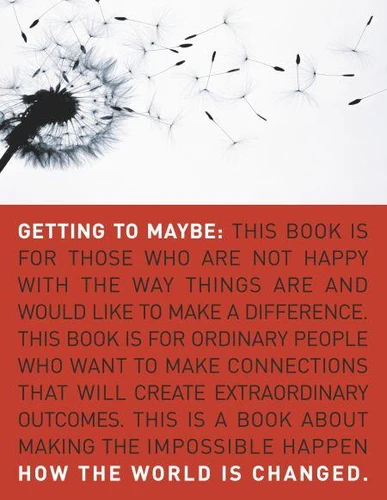
Getting to Maybe. How the World Is Changed
Par : , ,Formats :
Disponible dans votre compte client Decitre ou Furet du Nord dès validation de votre commande. Le format ePub protégé est :
- Compatible avec une lecture sur My Vivlio (smartphone, tablette, ordinateur)
- Compatible avec une lecture sur liseuses Vivlio
- Pour les liseuses autres que Vivlio, vous devez utiliser le logiciel Adobe Digital Edition. Non compatible avec la lecture sur les liseuses Kindle, Remarkable et Sony
- Non compatible avec un achat hors France métropolitaine
 , qui est-ce ?
Notre partenaire de plateforme de lecture numérique où vous retrouverez l'ensemble de vos ebooks gratuitement
Pour en savoir plus sur nos ebooks, consultez notre aide en ligne ici
C'est si simple ! Lisez votre ebook avec l'app Vivlio sur votre tablette, mobile ou ordinateur :

- Nombre de pages272
- FormatePub
- ISBN978-0-307-37114-0
- EAN9780307371140
- Date de parution19/03/2009
- Protection num.Adobe DRM
- Taille1020 Ko
- Infos supplémentairesepub
- ÉditeurVintage Canada
Résumé
A practical, inspirational, revolutionary guide to social innovationMany of us have a deep desire to make the world around us a better place. But often our good intentions are undermined by the fear that we are so insignificant in the big scheme of things that nothing we can do will actually help feed the world's hungry, fix the damage of a Hurricane Katrina or even get a healthy lunch program up and running in the local school.
We tend to think that great social change is the province of heroes-an intimidating view of reality that keeps ordinary people on the couch. But extraordinary leaders such as Gandhi and even unlikely social activists such as Bob Geldof most often see themselves as harnessing the forces around them, rather than singlehandedly setting those forces in motion. The trick in any great social project-from the global fight against AIDS to working to eradicate poverty in a single Canadian city-is to stop looking at the discrete elements and start trying to understand the complex relationships between them.
By studying fascinating real-life examples of social change through this systems-and-relationships lens, the authors of Getting to Maybe tease out the rules of engagement between volunteers, leaders, organizations and circumstance-between individuals and what Shakespeare called "the tide in the affairs of men."Getting to Maybe applies the insights of complexity theory and harvests the experiences of a wide range of people and organizations-including the ministers behind the Boston Miracle (and its aftermath); the Grameen Bank, in which one man's dream of micro-credit sparked a financial revolution for the world's poor; the efforts of a Canadian clothing designer to help transform the lives of Indigenous women and children; and many more-to lay out a brand new way of thinking about making change in communities, in business, and in the world.
We tend to think that great social change is the province of heroes-an intimidating view of reality that keeps ordinary people on the couch. But extraordinary leaders such as Gandhi and even unlikely social activists such as Bob Geldof most often see themselves as harnessing the forces around them, rather than singlehandedly setting those forces in motion. The trick in any great social project-from the global fight against AIDS to working to eradicate poverty in a single Canadian city-is to stop looking at the discrete elements and start trying to understand the complex relationships between them.
By studying fascinating real-life examples of social change through this systems-and-relationships lens, the authors of Getting to Maybe tease out the rules of engagement between volunteers, leaders, organizations and circumstance-between individuals and what Shakespeare called "the tide in the affairs of men."Getting to Maybe applies the insights of complexity theory and harvests the experiences of a wide range of people and organizations-including the ministers behind the Boston Miracle (and its aftermath); the Grameen Bank, in which one man's dream of micro-credit sparked a financial revolution for the world's poor; the efforts of a Canadian clothing designer to help transform the lives of Indigenous women and children; and many more-to lay out a brand new way of thinking about making change in communities, in business, and in the world.