
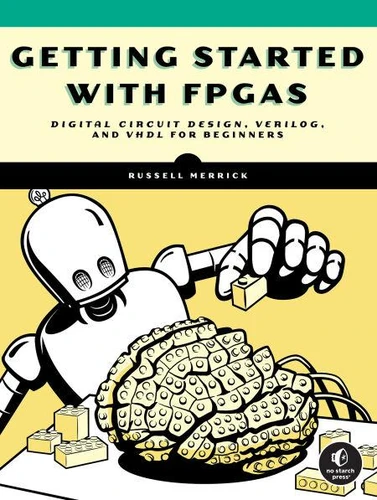
Getting Started with FPGAs. Digital Circuit Design, Verilog, and VHDL for Beginners
Par :Formats :
Disponible dans votre compte client Decitre ou Furet du Nord dès validation de votre commande. Le format ePub est :
- Compatible avec une lecture sur My Vivlio (smartphone, tablette, ordinateur)
- Compatible avec une lecture sur liseuses Vivlio
- Pour les liseuses autres que Vivlio, vous devez utiliser le logiciel Adobe Digital Edition. Non compatible avec la lecture sur les liseuses Kindle, Remarkable et Sony
 , qui est-ce ?
Notre partenaire de plateforme de lecture numérique où vous retrouverez l'ensemble de vos ebooks gratuitement
Pour en savoir plus sur nos ebooks, consultez notre aide en ligne ici
C'est si simple ! Lisez votre ebook avec l'app Vivlio sur votre tablette, mobile ou ordinateur :

- Nombre de pages320
- FormatePub
- ISBN978-1-7185-0295-6
- EAN9781718502956
- Date de parution21/11/2023
- Protection num.pas de protection
- Taille3 Mo
- Infos supplémentairesepub
- ÉditeurNo Starch Press
Résumé
Skip the complexity and learn to program FPGAs the easy way through this hands-on, beginner-friendly introduction to digital circuit design with Verilog and VHDL. Whether you have been toying with field programmable gate arrays (FPGAs) for years or are completely new to these reprogrammable devices, this book will teach you to think like an FPGA engineer and develop reliable designs with confidence.
Through detailed code examples, patient explanations, and hands-on projects, Getting Started with FPGAs will actually get you started. Russell Merrick, creator of the popular blog Nandland.com, will guide you through the basics of digital logic, look-up tables, and flip-flops, as well as high-level concepts like state machines. You'll explore the fundamentals of the FPGA build process including simulation, synthesis, and place and route.
You'll learn about key FPGA primitives, such as DSP blocks and PLLs, and examine how FPGAs handle math operations and I/O. Code examples are provided in both Verilog and VHDL, making the book a valuable resource no matter your language of choice. You'll discover how to: Implement common design building blocks like multiplexers, LFSRs, and FIFOs Cross between clock domains without triggering metastable conditions or timing errors Avoid common pitfalls when performing math Transmit and receive data at lightning speeds using SerDes Write testbench code to verify your designs are working With this accessible, hands-on guide, you'll be creating your own functional FPGA projects in no time.
Getting started with FPGAs has never been easier.
Through detailed code examples, patient explanations, and hands-on projects, Getting Started with FPGAs will actually get you started. Russell Merrick, creator of the popular blog Nandland.com, will guide you through the basics of digital logic, look-up tables, and flip-flops, as well as high-level concepts like state machines. You'll explore the fundamentals of the FPGA build process including simulation, synthesis, and place and route.
You'll learn about key FPGA primitives, such as DSP blocks and PLLs, and examine how FPGAs handle math operations and I/O. Code examples are provided in both Verilog and VHDL, making the book a valuable resource no matter your language of choice. You'll discover how to: Implement common design building blocks like multiplexers, LFSRs, and FIFOs Cross between clock domains without triggering metastable conditions or timing errors Avoid common pitfalls when performing math Transmit and receive data at lightning speeds using SerDes Write testbench code to verify your designs are working With this accessible, hands-on guide, you'll be creating your own functional FPGA projects in no time.
Getting started with FPGAs has never been easier.