SOLDES
Jusqu'à -70% sur une sélection d'articles*

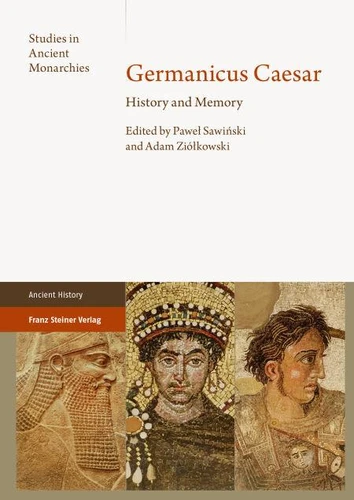
Germanicus Caesar. History and Memory
Par : ,Formats :
Disponible dans votre compte client Decitre ou Furet du Nord dès validation de votre commande. Le format PDF est :
- Compatible avec une lecture sur My Vivlio (smartphone, tablette, ordinateur)
- Compatible avec une lecture sur liseuses Vivlio
- Pour les liseuses autres que Vivlio, vous devez utiliser le logiciel Adobe Digital Edition. Non compatible avec la lecture sur les liseuses Kindle, Remarkable et Sony
 , qui est-ce ?
Notre partenaire de plateforme de lecture numérique où vous retrouverez l'ensemble de vos ebooks gratuitement
Pour en savoir plus sur nos ebooks, consultez notre aide en ligne ici
C'est si simple ! Lisez votre ebook avec l'app Vivlio sur votre tablette, mobile ou ordinateur :

- Nombre de pages170
- FormatPDF
- ISBN978-3-515-13446-0
- EAN9783515134460
- Date de parution23/02/2023
- Protection num.Digital Watermarking
- Taille42 Mo
- Infos supplémentairespdf
- ÉditeurFranz Steiner
Résumé
The historical memory of the principate is for obvious reasons dominated by the emperors, with one exception: Germanicus Caesar, who, though not a ruler, appears in the sources as if he had been one. Chosen by Augustus as his ultimate heir, the embodiment of the dynastic principle, yet never the emperor; put at the head of one third of the Roman army to reconquer Germania, but recalled before the task's completion; the last to hold an imperium which made him almost a co-regent of the emperor, cut short by his sudden death - he reflects like no one the transition of the principate from the Augustan phase to its mature form.
Equally significant is the longevity of the memory of his person and the variety of ways in which it was expressed: the only non-emperor commemorated in the Feriale Duranum, he figures on coins struck long after the end of the Julio-Claudians and an edict of his, quoted in a legal text of the 3rd century, appears in the Digesta. To give justice to his memorability, our contributions approach him in the perspective of not only history, classical philology, art history/archaeology and numismatics, but also Egyptology and Roman law.
Equally significant is the longevity of the memory of his person and the variety of ways in which it was expressed: the only non-emperor commemorated in the Feriale Duranum, he figures on coins struck long after the end of the Julio-Claudians and an edict of his, quoted in a legal text of the 3rd century, appears in the Digesta. To give justice to his memorability, our contributions approach him in the perspective of not only history, classical philology, art history/archaeology and numismatics, but also Egyptology and Roman law.