SOLDES
Jusqu'à -70% sur une sélection d'articles*

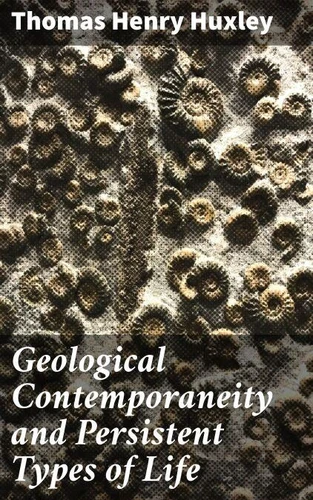
Geological Contemporaneity and Persistent Types of Life. Exploring Evolutionary Persistence Through Geological Data
Par :Formats :
Disponible dans votre compte client Decitre ou Furet du Nord dès validation de votre commande. Le format ePub est :
- Compatible avec une lecture sur My Vivlio (smartphone, tablette, ordinateur)
- Compatible avec une lecture sur liseuses Vivlio
- Pour les liseuses autres que Vivlio, vous devez utiliser le logiciel Adobe Digital Edition. Non compatible avec la lecture sur les liseuses Kindle, Remarkable et Sony
 , qui est-ce ?
Notre partenaire de plateforme de lecture numérique où vous retrouverez l'ensemble de vos ebooks gratuitement
Pour en savoir plus sur nos ebooks, consultez notre aide en ligne ici
C'est si simple ! Lisez votre ebook avec l'app Vivlio sur votre tablette, mobile ou ordinateur :

- Nombre de pages114
- FormatePub
- ISBN406-4-06-610308-8
- EAN4064066103088
- Date de parution16/03/2020
- Protection num.Digital Watermarking
- Taille637 Ko
- Infos supplémentairesepub
- ÉditeurGOOD PRESS
Résumé
In "Geological Contemporaneity and Persistent Types of Life, " Thomas Henry Huxley presents a groundbreaking examination of the relationships between species and geological time. Written in a compelling, scientifically rigorous style characteristic of 19th-century natural philosophy, Huxley explores the evidence for the coexistence of diverse life forms that have thrived across extensive geological epochs.
This work not only reflects the burgeoning ideas of evolutionary biology but also engages with contemporary debates surrounding the fossil record and the mechanisms of natural selection, ultimately challenging the prevailing paradigms of his time. Huxley, often referred to as "Darwin's Bulldog" for his vigorous defense of Charles Darwin's theories, was a pivotal figure in the advancement of biological sciences.
His own background in comparative anatomy and his passionate advocacy for scientific inquiry informed this treatise, through which he aimed to reconcile geological observations with evolving biological concepts. His work served as a bridge connecting earlier geological perspectives with innovative evolutionary thought, marking a significant point in the transition to modern biology. This book is a must-read for those interested in the intricate dance between life and geology, and it is particularly recommended for students of paleontology, biology, and the history of science.
Huxley's eloquent prose, coupled with his enduring insights, illuminates the continuity of life and its relevance to understanding our planet's history, making it essential for anyone seeking a deeper comprehension of biological persistence through geological time.
This work not only reflects the burgeoning ideas of evolutionary biology but also engages with contemporary debates surrounding the fossil record and the mechanisms of natural selection, ultimately challenging the prevailing paradigms of his time. Huxley, often referred to as "Darwin's Bulldog" for his vigorous defense of Charles Darwin's theories, was a pivotal figure in the advancement of biological sciences.
His own background in comparative anatomy and his passionate advocacy for scientific inquiry informed this treatise, through which he aimed to reconcile geological observations with evolving biological concepts. His work served as a bridge connecting earlier geological perspectives with innovative evolutionary thought, marking a significant point in the transition to modern biology. This book is a must-read for those interested in the intricate dance between life and geology, and it is particularly recommended for students of paleontology, biology, and the history of science.
Huxley's eloquent prose, coupled with his enduring insights, illuminates the continuity of life and its relevance to understanding our planet's history, making it essential for anyone seeking a deeper comprehension of biological persistence through geological time.
A propos de Thomas Henry Huxley



1,99 €
0,99 €
0,99 €