SOLDES
Jusqu'à -70% sur une sélection d'articles*

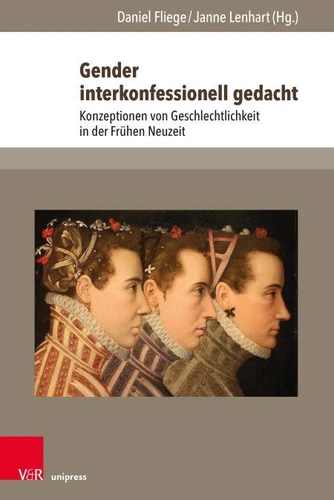
Gender interkonfessionell gedacht. Konzeptionen von Geschlechtlichkeit in der Frühen Neuzeit
Par : , , , ,Formats :
Disponible dans votre compte client Decitre ou Furet du Nord dès validation de votre commande. Le format PDF est :
- Compatible avec une lecture sur My Vivlio (smartphone, tablette, ordinateur)
- Compatible avec une lecture sur liseuses Vivlio
- Pour les liseuses autres que Vivlio, vous devez utiliser le logiciel Adobe Digital Edition. Non compatible avec la lecture sur les liseuses Kindle, Remarkable et Sony
 , qui est-ce ?
Notre partenaire de plateforme de lecture numérique où vous retrouverez l'ensemble de vos ebooks gratuitement
Pour en savoir plus sur nos ebooks, consultez notre aide en ligne ici
C'est si simple ! Lisez votre ebook avec l'app Vivlio sur votre tablette, mobile ou ordinateur :

- Nombre de pages213
- FormatPDF
- ISBN978-3-8470-1178-1
- EAN9783847011781
- Date de parution05/10/2020
- Protection num.pas de protection
- Taille10 Mo
- Infos supplémentairespdf
- ÉditeurV&R Unipress
Résumé
Die Reformation markiert einen Aufbruch, der Frauen neue Handlungsmöglichkeiten eröffnete und Vorstellungen der Geschlechterordnung sowie der Rollen von Männern und Frauen, Müttern und Vätern, Eheleuten und der Familie wandelte. Der Band nimmt daher nicht nur Konzepte von Weiblichkeit in den Blick, sondern auch Männlichkeit, Ehe und Familie. Der Schwerpunkt liegt darauf, diese Phänomene in Hinblick auf unterschiedliche künstlerische und mediale Repräsentationsformen von Geschlechtlichkeit in konfessionellen Kontexten zu erkunden.
Als gemeinsamer methodischer Zugriff dient dabei das Konzept der Interkonfessionalität: So sollen Durchlässigkeiten zwischen den Konfessionen und konfessionsübergreifende Konstruktionen von Geschlechtlichkeit in der Frühen Neuzeit erfasst werden. The Reformation marks a time of change that opened up new possibilities for women to act and transformed ideas about the order and coexistence of gender and the roles of men and women, mothers and fathers, husbands and wives, and the family.
The volume therefore explicitly takes into account not only concepts of femininity, but also masculinity, marriage, and family. The main focus of the volume is to explore these phenomena in terms of different artistic and medial forms of representation of gender in denominational contexts. The concept of interconfessionality serves as a common methodological approach: in this way, permeabilities between denominations and cross-denominational constructions of gender in the early modern period are explored.
Als gemeinsamer methodischer Zugriff dient dabei das Konzept der Interkonfessionalität: So sollen Durchlässigkeiten zwischen den Konfessionen und konfessionsübergreifende Konstruktionen von Geschlechtlichkeit in der Frühen Neuzeit erfasst werden. The Reformation marks a time of change that opened up new possibilities for women to act and transformed ideas about the order and coexistence of gender and the roles of men and women, mothers and fathers, husbands and wives, and the family.
The volume therefore explicitly takes into account not only concepts of femininity, but also masculinity, marriage, and family. The main focus of the volume is to explore these phenomena in terms of different artistic and medial forms of representation of gender in denominational contexts. The concept of interconfessionality serves as a common methodological approach: in this way, permeabilities between denominations and cross-denominational constructions of gender in the early modern period are explored.