SOLDES
Jusqu'à -70% sur une sélection d'articles*

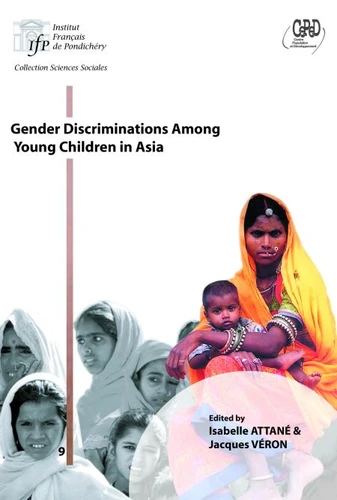
Gender discriminations among young children in Asia
Par : ,Formats :
Disponible dans votre compte client Decitre ou Furet du Nord dès validation de votre commande. Le format Multi-format est :
- Pour les liseuses autres que Vivlio, vous devez utiliser le logiciel Adobe Digital Edition. Non compatible avec la lecture sur les liseuses Kindle, Remarkable et Sony
 , qui est-ce ?
Notre partenaire de plateforme de lecture numérique où vous retrouverez l'ensemble de vos ebooks gratuitement
Pour en savoir plus sur nos ebooks, consultez notre aide en ligne ici
C'est si simple ! Lisez votre ebook avec l'app Vivlio sur votre tablette, mobile ou ordinateur :

- Nombre de pages315
- FormatMulti-format
- ISBN979-10-365-4986-1
- EAN9791036549861
- Date de parution09/10/2020
- Protection num.pas de protection
- Infos supplémentairesMulti-Format
- ÉditeurInstitut français de Pondichéry
Résumé
Subsequent to the demographic transition, Asian countries have been experiencing deep-rooted changes in family structures. In this context, the question of gender relations within the family, and more generally within society, is crucial, in view of the increase in discriminatory practices toward women, beginning at foetal conception and continuing through all stages of life. Asia is the "black continent" for women.
Estimates place the deficit in the number of women in the world at between 60 and 100 million, the vast majority of which is found on this continent. This book focuses on the intensity of female discrimination, from a demographic perspective, in the earliest stages of life, and more specifically around birth, in China, India, Pakistan, the Republic of Korea and Taiwan. These societies share cultural characteristics that are not favourable to women: patriarchal systems, patrilineal families, socialization processes encouraging the submission of wives to their husband's family, etc.
In these societies, a son is needed to perpetuate the family line and ensure social and biological reproduction of the family. These are among the reasons why they share a strong son preference, which is in some cases accentuated by economic constraints. A son is generally the only person to support his parents in old age, and as a rule help with work in the fields. Moreover, girls and women still occupy a marginal position in society, whereas a male heir offers countless advantages.
Estimates place the deficit in the number of women in the world at between 60 and 100 million, the vast majority of which is found on this continent. This book focuses on the intensity of female discrimination, from a demographic perspective, in the earliest stages of life, and more specifically around birth, in China, India, Pakistan, the Republic of Korea and Taiwan. These societies share cultural characteristics that are not favourable to women: patriarchal systems, patrilineal families, socialization processes encouraging the submission of wives to their husband's family, etc.
In these societies, a son is needed to perpetuate the family line and ensure social and biological reproduction of the family. These are among the reasons why they share a strong son preference, which is in some cases accentuated by economic constraints. A son is generally the only person to support his parents in old age, and as a rule help with work in the fields. Moreover, girls and women still occupy a marginal position in society, whereas a male heir offers countless advantages.
A propos de Isabelle Attané

14,85 €

13,99 €