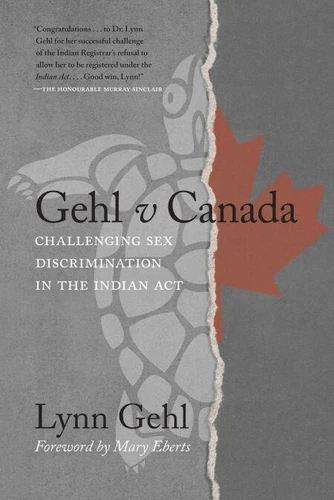
Gehl v Canada. Challenging Sex Discrimination in the Indian Act
Par :Formats :
Disponible dans votre compte client Decitre ou Furet du Nord dès validation de votre commande. Le format ePub est :
- Compatible avec une lecture sur My Vivlio (smartphone, tablette, ordinateur)
- Compatible avec une lecture sur liseuses Vivlio
- Pour les liseuses autres que Vivlio, vous devez utiliser le logiciel Adobe Digital Edition. Non compatible avec la lecture sur les liseuses Kindle, Remarkable et Sony
 , qui est-ce ?
Notre partenaire de plateforme de lecture numérique où vous retrouverez l'ensemble de vos ebooks gratuitement
Pour en savoir plus sur nos ebooks, consultez notre aide en ligne ici
C'est si simple ! Lisez votre ebook avec l'app Vivlio sur votre tablette, mobile ou ordinateur :

- Nombre de pages288
- FormatePub
- ISBN978-0-88977-828-3
- EAN9780889778283
- Date de parution18/09/2021
- Protection num.Digital Watermarking
- Taille4 Mo
- Infos supplémentairesepub
- ÉditeurUniversity of Regina Press
Résumé
A follow-up to Claiming Anishinaabe, Gehl v Canada is the story of Lynn Gehl's lifelong journey of survival against the nation-state's constant genocidal assault against her existence. While Canada set up its colonial powers-including the Supreme Court, House of Commons, Senate Chamber, and the Residences of the Prime Minister and Governor General-on her traditional Algonquin territory, usurping the riches and resources of the land, she was pushed to the margins, exiled to a life of poverty in Toronto's inner-city.
With only beads in her pocket, Gehl spent her entire life fighting back, and now offers an insider analysis of Indian Act litigation, the narrow remedies the court imposes, and of obfuscating parliamentary discourse, as well as an important critique of the methodology of legal positivism. Drawing on social identity and Indigenous theories, the author presents Disenfranchised Spirit Theory, revealing insights into the identity struggles facing Indigenous Peoples to this day.
With only beads in her pocket, Gehl spent her entire life fighting back, and now offers an insider analysis of Indian Act litigation, the narrow remedies the court imposes, and of obfuscating parliamentary discourse, as well as an important critique of the methodology of legal positivism. Drawing on social identity and Indigenous theories, the author presents Disenfranchised Spirit Theory, revealing insights into the identity struggles facing Indigenous Peoples to this day.