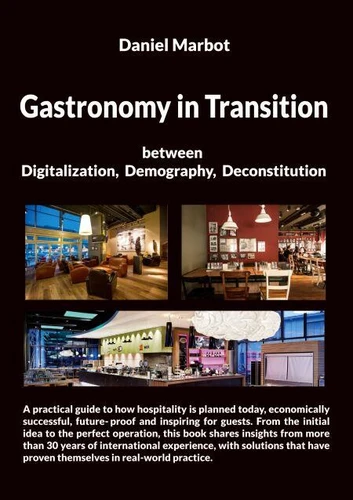
GASTRONOMY IN TRANSITION. Between Digitalization, Demography and Deconstitution
Par :Formats :
Disponible dans votre compte client Decitre ou Furet du Nord dès validation de votre commande. Le format ePub est :
- Compatible avec une lecture sur My Vivlio (smartphone, tablette, ordinateur)
- Compatible avec une lecture sur liseuses Vivlio
- Pour les liseuses autres que Vivlio, vous devez utiliser le logiciel Adobe Digital Edition. Non compatible avec la lecture sur les liseuses Kindle, Remarkable et Sony
 , qui est-ce ?
Notre partenaire de plateforme de lecture numérique où vous retrouverez l'ensemble de vos ebooks gratuitement
Pour en savoir plus sur nos ebooks, consultez notre aide en ligne ici
C'est si simple ! Lisez votre ebook avec l'app Vivlio sur votre tablette, mobile ou ordinateur :

- Nombre de pages88
- FormatePub
- ISBN978-3-7693-4386-1
- EAN9783769343861
- Date de parution05/01/2026
- Protection num.Digital Watermarking
- Taille702 Ko
- Infos supplémentairesepub
- ÉditeurBoD - Books on Demand
Résumé
Gastronomy in Transition explores how the hospitality and foodservice sector is being reshaped by digitalisation, sustainability, demographic change, and shifting guest expectations. Based on more than 30 years of practical experience as a consultant, planner, and strategic advisor, Daniel Marbot offers a clear and accessible guide for municipalities, architects, operators, investors, and decision-makers who are designing or managing gastronomic environments.
The book explains why traditional planning approaches are no longer sufficient and how modern gastronomy requires a holistic view that integrates concept development, operational logic, technical planning, and economic viability from the very beginning.
Marbot presents concrete recommendations for creating kitchens, restaurants, and foodservice spaces that function reliably in day-to-day operations and remain flexible for future needs. Key chapters address essential topics such as quality management, workflow efficiency, sustainability and energy considerations, digital tools, guest experience, staffing, and the role of gastronomy as a social space.
Real-world examples illustrate how successful establishments combine technical standards with atmosphere, culture, and community impact. Gastronomy in Transition is written for professionals who want clarity in a rapidly changing environment. It offers a structured roadmap for navigating complexity and making better strategic decisions, whether in public institutions, private hospitality projects, or large-scale operations.
Readers gain actionable insights, practical frameworks, and a deeper understanding of how gastronomy can stay relevant, economically sound, and socially meaningful in the years ahead.
Marbot presents concrete recommendations for creating kitchens, restaurants, and foodservice spaces that function reliably in day-to-day operations and remain flexible for future needs. Key chapters address essential topics such as quality management, workflow efficiency, sustainability and energy considerations, digital tools, guest experience, staffing, and the role of gastronomy as a social space.
Real-world examples illustrate how successful establishments combine technical standards with atmosphere, culture, and community impact. Gastronomy in Transition is written for professionals who want clarity in a rapidly changing environment. It offers a structured roadmap for navigating complexity and making better strategic decisions, whether in public institutions, private hospitality projects, or large-scale operations.
Readers gain actionable insights, practical frameworks, and a deeper understanding of how gastronomy can stay relevant, economically sound, and socially meaningful in the years ahead.