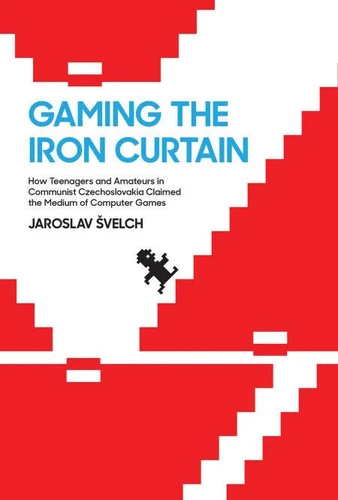
Gaming the Iron Curtain. How Teenagers and Amateurs in Communist Czechoslovakia Claimed the Medium of Computer Games
Par :Formats :
Disponible dans votre compte client Decitre ou Furet du Nord dès validation de votre commande. Le format ePub protégé est :
- Compatible avec une lecture sur My Vivlio (smartphone, tablette, ordinateur)
- Compatible avec une lecture sur liseuses Vivlio
- Pour les liseuses autres que Vivlio, vous devez utiliser le logiciel Adobe Digital Edition. Non compatible avec la lecture sur les liseuses Kindle, Remarkable et Sony
- Non compatible avec un achat hors France métropolitaine
 , qui est-ce ?
Notre partenaire de plateforme de lecture numérique où vous retrouverez l'ensemble de vos ebooks gratuitement
Pour en savoir plus sur nos ebooks, consultez notre aide en ligne ici
C'est si simple ! Lisez votre ebook avec l'app Vivlio sur votre tablette, mobile ou ordinateur :

- Nombre de pages400
- FormatePub
- ISBN978-0-262-34951-2
- EAN9780262349512
- Date de parution25/12/2018
- Protection num.Adobe DRM
- Taille71 Mo
- Infos supplémentairesepub
- ÉditeurThe MIT Press
Résumé
How amateur programmers in 1980s Czechoslovakia discovered games as a medium, using them not only for entertainment but also as a means of self-expression. Aside from the exceptional history of Tetris, very little is known about gaming culture behind the Iron Curtain. But despite the scarcity of home computers and the absence of hardware and software markets, Czechoslovakia hosted a remarkably active DIY microcomputer scene in the 1980s, producing more than two hundred games that were by turns creative, inventive, and politically subversive.
In Gaming the Iron Curtain, Jaroslav Svelch offers the first social history of gaming and game design in 1980s Czechoslovakia, and the first book-length treatment of computer gaming in any country of the Soviet bloc. Svelch describes how amateur programmers in 1980s Czechoslovakia discovered games as a medium, using them not only for entertainment but also as a means of self-expression. Sheltered in state-supported computer clubs, local programmers fashioned games into a medium of expression that, unlike television or the press, was neither regulated nor censored.
In the final years of Communist rule, Czechoslovak programmers were among the first in the world to make activist games about current political events, anticipating trends observed decades later in independent or experimental titles. Drawing from extensive interviews as well as political, economic, and social history, Gaming the Iron Curtain tells a compelling tale of gaming the system, introducing us to individuals who used their ingenuity to be active, be creative, and be heard.
In Gaming the Iron Curtain, Jaroslav Svelch offers the first social history of gaming and game design in 1980s Czechoslovakia, and the first book-length treatment of computer gaming in any country of the Soviet bloc. Svelch describes how amateur programmers in 1980s Czechoslovakia discovered games as a medium, using them not only for entertainment but also as a means of self-expression. Sheltered in state-supported computer clubs, local programmers fashioned games into a medium of expression that, unlike television or the press, was neither regulated nor censored.
In the final years of Communist rule, Czechoslovak programmers were among the first in the world to make activist games about current political events, anticipating trends observed decades later in independent or experimental titles. Drawing from extensive interviews as well as political, economic, and social history, Gaming the Iron Curtain tells a compelling tale of gaming the system, introducing us to individuals who used their ingenuity to be active, be creative, and be heard.