
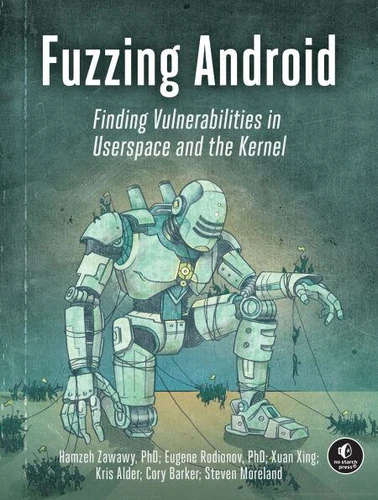
Fuzzing Android
Par : , , , ,Formats :
Disponible dans votre compte client Decitre ou Furet du Nord dès validation de votre commande. Le format ePub est :
- Compatible avec une lecture sur My Vivlio (smartphone, tablette, ordinateur)
- Compatible avec une lecture sur liseuses Vivlio
- Pour les liseuses autres que Vivlio, vous devez utiliser le logiciel Adobe Digital Edition. Non compatible avec la lecture sur les liseuses Kindle, Remarkable et Sony
 , qui est-ce ?
Notre partenaire de plateforme de lecture numérique où vous retrouverez l'ensemble de vos ebooks gratuitement
Pour en savoir plus sur nos ebooks, consultez notre aide en ligne ici
C'est si simple ! Lisez votre ebook avec l'app Vivlio sur votre tablette, mobile ou ordinateur :

- Nombre de pages216
- Date de parution03/11/2026
- FormatePub
- ISBN978-1-7185-0530-8
- EAN9781718505308
- Protection num.pas de protection
- Infos supplémentairesepub
- ÉditeurNo Starch Press
Résumé
The operational playbook for fuzzing Android, from Binder services to the Linux kernel, by Google's Android Security Team. Android is three billion devices of hardened, audited, relentlessly defended code, and fuzzing brings it down anyway. The method is almost crude: bury the system in malformed input and wait for the rare case that cracks something open. A crash is the tell, and behind it is usually a way in.
This is the book from the Google engineers who do that for a living. They've fuzzed Android's Binder IPC, the Pixel modem, GPU drivers, and kernel components, and found root-level vulnerabilities the architecture was supposed to keep out of reach. Now they show you how they work. Most fuzzing books stop at the concept. This one runs the campaign. You'll target the IPC layer with libFuzzer and AFL++, stand up a reproducible environment across emulators and real devices, instrument native code and system services for coverage, triage and reproduce crashes, and extend Syzkaller to reach new kernel drivers.
Just as important, you'll build the judgment that separates a fuzzer that finds bugs from one that only makes noise: which targets are worth your time, when to bypass runtime checks, and how to keep a campaign disciplined instead of chaotic. No other book covers Android fuzzing from userspace services through the kernel. The existing titles stop at app-layer pentesting or teach general fuzzing with no Android specificity.
This is the one written by the people who actually found the bugs. With a foreword by David Kleidermacher, Google's VP of Platforms Security and Privacy. For security researchers, OEM security engineers, and bug bounty hunters who target the world's largest mobile platform and want the operational playbook rather than the tour.
This is the book from the Google engineers who do that for a living. They've fuzzed Android's Binder IPC, the Pixel modem, GPU drivers, and kernel components, and found root-level vulnerabilities the architecture was supposed to keep out of reach. Now they show you how they work. Most fuzzing books stop at the concept. This one runs the campaign. You'll target the IPC layer with libFuzzer and AFL++, stand up a reproducible environment across emulators and real devices, instrument native code and system services for coverage, triage and reproduce crashes, and extend Syzkaller to reach new kernel drivers.
Just as important, you'll build the judgment that separates a fuzzer that finds bugs from one that only makes noise: which targets are worth your time, when to bypass runtime checks, and how to keep a campaign disciplined instead of chaotic. No other book covers Android fuzzing from userspace services through the kernel. The existing titles stop at app-layer pentesting or teach general fuzzing with no Android specificity.
This is the one written by the people who actually found the bugs. With a foreword by David Kleidermacher, Google's VP of Platforms Security and Privacy. For security researchers, OEM security engineers, and bug bounty hunters who target the world's largest mobile platform and want the operational playbook rather than the tour.