
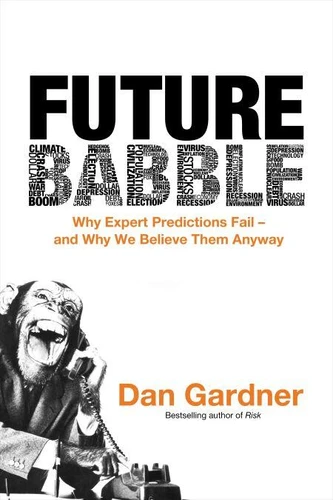
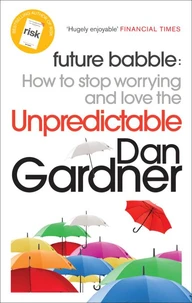
Future Babble. Why Expert Predictions Fail - and Why We Believe Them Anyway
Par :Formats :
Disponible dans votre compte client Decitre ou Furet du Nord dès validation de votre commande. Le format ePub protégé est :
- Compatible avec une lecture sur My Vivlio (smartphone, tablette, ordinateur)
- Compatible avec une lecture sur liseuses Vivlio
- Pour les liseuses autres que Vivlio, vous devez utiliser le logiciel Adobe Digital Edition. Non compatible avec la lecture sur les liseuses Kindle, Remarkable et Sony
- Non compatible avec un achat hors France métropolitaine
 , qui est-ce ?
Notre partenaire de plateforme de lecture numérique où vous retrouverez l'ensemble de vos ebooks gratuitement
Pour en savoir plus sur nos ebooks, consultez notre aide en ligne ici
C'est si simple ! Lisez votre ebook avec l'app Vivlio sur votre tablette, mobile ou ordinateur :

- Nombre de pages320
- FormatePub
- ISBN978-0-7710-3521-0
- EAN9780771035210
- Date de parution12/10/2010
- Protection num.Adobe DRM
- Taille2 Mo
- Infos supplémentairesepub
- ÉditeurMcClelland & Stewart
Résumé
In 2008, as the price of oil surged above $140 a barrel, experts said it would soon hit $200; a few months later it plunged to $30. In 1967, they said the USSR would have one of the fastest-growing economies in the year 2000; in 2000, the USSR did not exist. In 1911, it was pronounced that there would be no more wars in Europe; we all know how that turned out. Face it, experts are about as accurate as dart-throwing monkeys.
And yet every day we ask them to predict the future - everything from the weather to the likelihood of a catastrophic terrorist attack. Future Babble is the first book to examine this phenomenon, showing why our brains yearn for certainty about the future, why we are attracted to those who predict it confidently, and why it's so easy for us to ignore the trail of outrageously wrong forecasts. In this fast-paced, example-packed, sometimes darkly hilarious book, journalist Dan Gardner shows how seminal research by UC Berkeley professor Philip Tetlock proved that pundits who are more famous are less accurate - and the average expert is no more accurate than a flipped coin. Gardner also draws on current research in cognitive psychology, political science, and behavioral economics to discover something quite reassuring: The future is always uncertain, but the end is not always near.
And yet every day we ask them to predict the future - everything from the weather to the likelihood of a catastrophic terrorist attack. Future Babble is the first book to examine this phenomenon, showing why our brains yearn for certainty about the future, why we are attracted to those who predict it confidently, and why it's so easy for us to ignore the trail of outrageously wrong forecasts. In this fast-paced, example-packed, sometimes darkly hilarious book, journalist Dan Gardner shows how seminal research by UC Berkeley professor Philip Tetlock proved that pundits who are more famous are less accurate - and the average expert is no more accurate than a flipped coin. Gardner also draws on current research in cognitive psychology, political science, and behavioral economics to discover something quite reassuring: The future is always uncertain, but the end is not always near.
A propos de Dan Gardner

22,90 €


21,40 €