
Dr. Andreas Bähr ist derzeit Professor für Europäische Kulturgeschichte der Neuzeit an der Europa-Universität Viadrina Frankfurt (Oder).
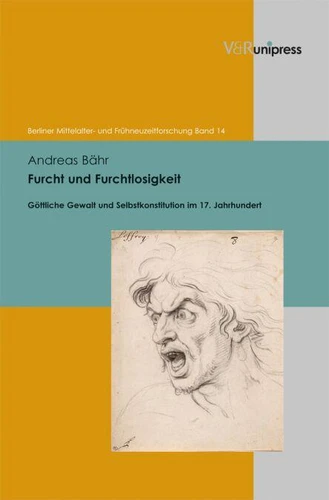
Furcht und Furchtlosigkeit. Göttliche Gewalt und Selbstkonstitution im 17. Jahrhundert
Par : ,Formats :
Disponible dans votre compte client Decitre ou Furet du Nord dès validation de votre commande. Le format PDF est :
- Compatible avec une lecture sur My Vivlio (smartphone, tablette, ordinateur)
- Compatible avec une lecture sur liseuses Vivlio
- Pour les liseuses autres que Vivlio, vous devez utiliser le logiciel Adobe Digital Edition. Non compatible avec la lecture sur les liseuses Kindle, Remarkable et Sony
 , qui est-ce ?
Notre partenaire de plateforme de lecture numérique où vous retrouverez l'ensemble de vos ebooks gratuitement
Pour en savoir plus sur nos ebooks, consultez notre aide en ligne ici
C'est si simple ! Lisez votre ebook avec l'app Vivlio sur votre tablette, mobile ou ordinateur :

- Nombre de pages660
- FormatPDF
- ISBN978-3-8470-0086-0
- EAN9783847000860
- Date de parution24/04/2013
- Protection num.pas de protection
- Taille4 Mo
- Infos supplémentairespdf
- ÉditeurV&R Unipress
Résumé
In the seventeenth century, fear and anxiety served as basic concepts for personal and social self-constitution. The complex problematization of these affects is found not only in scholarly debates and literature but also in a variety of autobiographical and self-narrative sources from the Thirty Years' War and wars against the "Turks". This book highlights historical explanations of fear, anxiety and terror, contextualizing them within early modern theories and notions of affect and imagination.
Further, it explores the functions of these particular "emotions of the soul" Contemporaries regularly remembered their fear of human and divine retribution, stressing its specifically violent potential. In doing so, they also instructed their readers as to the religious and moral preconditions for overcoming their fears. The present study demonstrates that, in the seventeenth century at least, the concept of "fear" was often related to the "fear of God", and as such fundmentally different from the modern "feelings" of fear and anxiety.
Further, it explores the functions of these particular "emotions of the soul" Contemporaries regularly remembered their fear of human and divine retribution, stressing its specifically violent potential. In doing so, they also instructed their readers as to the religious and moral preconditions for overcoming their fears. The present study demonstrates that, in the seventeenth century at least, the concept of "fear" was often related to the "fear of God", and as such fundmentally different from the modern "feelings" of fear and anxiety.
A propos de Andreas Bähr

19,99 €