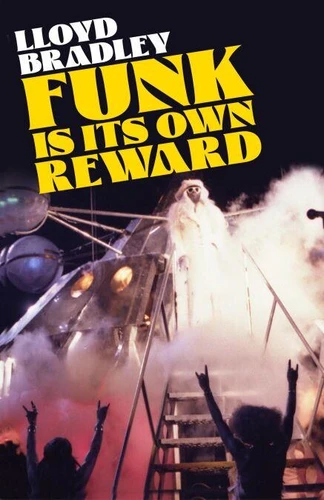
An intimate, definitive exploration of Funk, the sound of a generation, that tells its stories, its triumphs and excesses. From 1968 to 1978; from 'Say It Loud - I'm Black and I'm Proud' to Off The Wall; from the Third Harlem Cultural Festival to the P-Funk Earth Tour: Funk Is Its Own Reward plots the journey of an African American cultural movement that was always about far more than simply music.
With roots in the poetry, art, theatre, intellectualism and jazz of the celebrated 1960s Black Arts Movement, and made possible by the shifts in thinking brought about by the Black Panthers, the rise of HBSUs and black political involvement, funk was the Second Great Black Renaissance. Funk Is Its Own Reward makes the connections between the literature, films, television, black arts collectives, theatre groups and media and analyses how they fed into a cultural wave that made a music confident enough to embrace the likes of Barry White, Bill Withers, 24 Carat Black, Bootsy, Mandrill, the O'Jays, the Fatback Band, Miles Davis, and the Brides of Funkenstein not just possible but inevitable.
It looks at how, once African American popular music reconnected with and fully expressed the culture that created it, it had to freedom to express itself in any way it saw fit and still be funky. The music gave itself to the scope to be acoustic, to be vocal harmony, to be brassy, to make social comment, to be orchestral, to be headed for the bedroom, to be all about the rhythm, to be electronic .
An intimate, definitive exploration of Funk, the sound of a generation, that tells its stories, its triumphs and excesses. From 1968 to 1978; from 'Say It Loud - I'm Black and I'm Proud' to Off The Wall; from the Third Harlem Cultural Festival to the P-Funk Earth Tour: Funk Is Its Own Reward plots the journey of an African American cultural movement that was always about far more than simply music.
With roots in the poetry, art, theatre, intellectualism and jazz of the celebrated 1960s Black Arts Movement, and made possible by the shifts in thinking brought about by the Black Panthers, the rise of HBSUs and black political involvement, funk was the Second Great Black Renaissance. Funk Is Its Own Reward makes the connections between the literature, films, television, black arts collectives, theatre groups and media and analyses how they fed into a cultural wave that made a music confident enough to embrace the likes of Barry White, Bill Withers, 24 Carat Black, Bootsy, Mandrill, the O'Jays, the Fatback Band, Miles Davis, and the Brides of Funkenstein not just possible but inevitable.
It looks at how, once African American popular music reconnected with and fully expressed the culture that created it, it had to freedom to express itself in any way it saw fit and still be funky. The music gave itself to the scope to be acoustic, to be vocal harmony, to be brassy, to make social comment, to be orchestral, to be headed for the bedroom, to be all about the rhythm, to be electronic .

 , qui est-ce ?
