
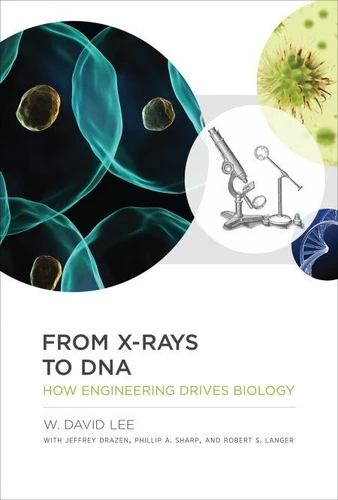
From X-rays to DNA. How Engineering Drives Biology
Par : , , ,Formats :
Disponible dans votre compte client Decitre ou Furet du Nord dès validation de votre commande. Le format ePub protégé est :
- Compatible avec une lecture sur My Vivlio (smartphone, tablette, ordinateur)
- Compatible avec une lecture sur liseuses Vivlio
- Pour les liseuses autres que Vivlio, vous devez utiliser le logiciel Adobe Digital Edition. Non compatible avec la lecture sur les liseuses Kindle, Remarkable et Sony
- Non compatible avec un achat hors France métropolitaine
 , qui est-ce ?
Notre partenaire de plateforme de lecture numérique où vous retrouverez l'ensemble de vos ebooks gratuitement
Pour en savoir plus sur nos ebooks, consultez notre aide en ligne ici
C'est si simple ! Lisez votre ebook avec l'app Vivlio sur votre tablette, mobile ou ordinateur :

- Nombre de pages248
- FormatePub
- ISBN978-0-262-31839-6
- EAN9780262318396
- Date de parution15/11/2013
- Protection num.Adobe DRM
- Taille3 Mo
- Infos supplémentairesepub
- ÉditeurThe MIT Press
Résumé
An argument that technology accelerates biological discovery, with case studies ranging from chromosome discovery with early microscopes to how DNA replicates using radioisotope labels. Engineering has been an essential collaborator in biological research and breakthroughs in biology are often enabled by technological advances. Decoding the double helix structure of DNA, for example, only became possible after significant advances in such technologies as X-ray diffraction and gel electrophoresis.
Diagnosis and treatment of tuberculosis improved as new technologies-including the stethoscope, the microscope, and the X-ray-developed. These engineering breakthroughs take place away from the biology lab, and many years may elapse before the technology becomes available to biologists. In this book, David Lee argues for concurrent engineering-the convergence of engineering and biological research-as a means to accelerate the pace of biological discovery and its application to diagnosis and treatment.
He presents extensive case studies and introduces a metric to measure the time between technological development and biological discovery. Investigating a series of major biological discoveries that range from pasteurization to electron microscopy, Lee finds that it took an average of forty years for the necessary technology to become available for laboratory use. Lee calls for new approaches to research and funding to encourage a tighter, more collaborative coupling of engineering and biology.
Only then, he argues, will we see the rapid advances in the life sciences that are critically needed for life-saving diagnosis and treatment.
Diagnosis and treatment of tuberculosis improved as new technologies-including the stethoscope, the microscope, and the X-ray-developed. These engineering breakthroughs take place away from the biology lab, and many years may elapse before the technology becomes available to biologists. In this book, David Lee argues for concurrent engineering-the convergence of engineering and biological research-as a means to accelerate the pace of biological discovery and its application to diagnosis and treatment.
He presents extensive case studies and introduces a metric to measure the time between technological development and biological discovery. Investigating a series of major biological discoveries that range from pasteurization to electron microscopy, Lee finds that it took an average of forty years for the necessary technology to become available for laboratory use. Lee calls for new approaches to research and funding to encourage a tighter, more collaborative coupling of engineering and biology.
Only then, he argues, will we see the rapid advances in the life sciences that are critically needed for life-saving diagnosis and treatment.