
Prix Nobel de la Paix 1986.
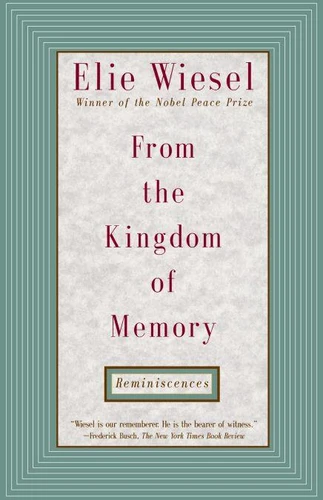
From the Kingdom of Memory. Reminiscences
Par :Formats :
Disponible dans votre compte client Decitre ou Furet du Nord dès validation de votre commande. Le format ePub protégé est :
- Compatible avec une lecture sur My Vivlio (smartphone, tablette, ordinateur)
- Compatible avec une lecture sur liseuses Vivlio
- Pour les liseuses autres que Vivlio, vous devez utiliser le logiciel Adobe Digital Edition. Non compatible avec la lecture sur les liseuses Kindle, Remarkable et Sony
- Non compatible avec un achat hors France métropolitaine
 , qui est-ce ?
Notre partenaire de plateforme de lecture numérique où vous retrouverez l'ensemble de vos ebooks gratuitement
Pour en savoir plus sur nos ebooks, consultez notre aide en ligne ici
C'est si simple ! Lisez votre ebook avec l'app Vivlio sur votre tablette, mobile ou ordinateur :

- Nombre de pages256
- FormatePub
- ISBN978-0-307-80643-7
- EAN9780307806437
- Date de parution14/09/2011
- Protection num.Adobe DRM
- Taille2 Mo
- Infos supplémentairesepub
- ÉditeurSchocken
Résumé
In this "powerful" (New York Times Book review) collection of personal essays and landmark speeches by "one of the great writers of our generation" (New Republic), Elie Wiesel weaves together reminiscences of his life before the Holocaust, his struggle to find meaning afterward, and the actions he has taken on behalf of others that have defined him as a leading advocate of humanity and have earned him the Nobel Peace Prize.
Here, too, as a tribute to the dead and an exhortation to the living are landmark speeches, among them his powerful testimony at the Klaus Barbie trial, his impassioned plea to President Reagan not to visit a German S. S. cemetery, and the speech he gave in Oslo in acceptance of the Nobel Peace Prize, in which he voices his hope that "the memory of evil will serve as a shield against evil."
Here, too, as a tribute to the dead and an exhortation to the living are landmark speeches, among them his powerful testimony at the Klaus Barbie trial, his impassioned plea to President Reagan not to visit a German S. S. cemetery, and the speech he gave in Oslo in acceptance of the Nobel Peace Prize, in which he voices his hope that "the memory of evil will serve as a shield against evil."
A propos de Elie Wiesel
4.8/5
La Nuit
Poche
7,90 €

11,00 €
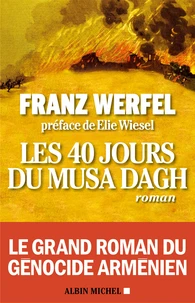
Les 40 jours du Musa Dagh
Grand Format
29,90 €
8,70 €
18,99 €
8,40 €
7,99 €
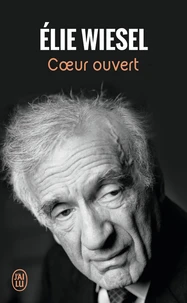
3.7/5
3,87 €
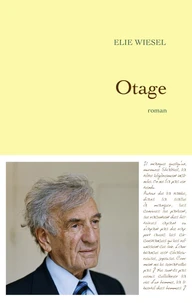
Otage - Occasion
Grand Format
11,16 €

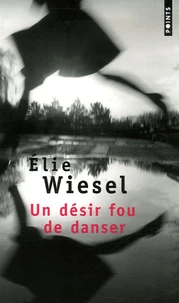
4,78 €
4.8/5
La Nuit - Occasion
Poche
4,34 €
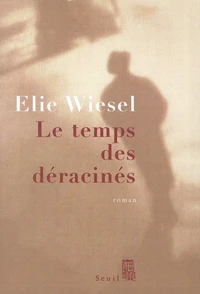
5/5
Le Temps Des Deracines - Occasion
Grand Format
4,06 €
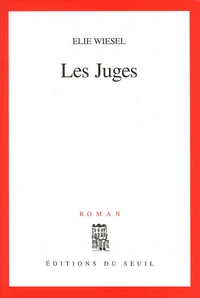
Les juges - Occasion
Grand Format
3,78 €
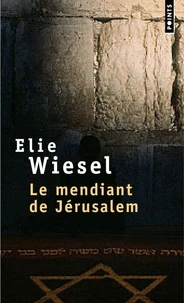
3,87 €