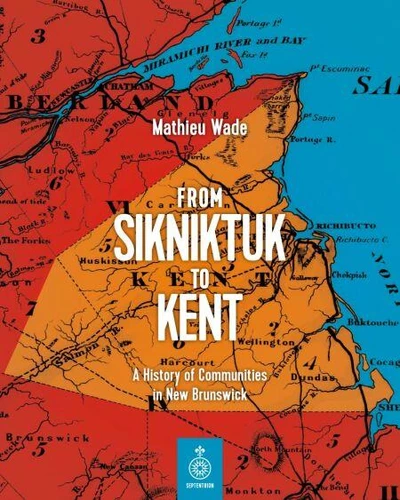
Kent, a rural county in southeastern New Brunswick, is in many ways typical of the province's settlement structure. In the heart of the Sikniktuk district, on Mi'kmaw land, the territory experienced waves of Acadian, English, Scottish and Irish colonization and some 230 towns and villages were established along the rivers and railways between the end of the 18th century and the beginning of the 20thIn this book, Mathieu Wade analyzes the complexities of colonization and encounters between nations.
He contextualizes the history of Kent's communities by placing their unique journey in a larger framework in order to reveal the main thrusts that have shaped this territory.
Kent, a rural county in southeastern New Brunswick, is in many ways typical of the province's settlement structure. In the heart of the Sikniktuk district, on Mi'kmaw land, the territory experienced waves of Acadian, English, Scottish and Irish colonization and some 230 towns and villages were established along the rivers and railways between the end of the 18th century and the beginning of the 20thIn this book, Mathieu Wade analyzes the complexities of colonization and encounters between nations.
He contextualizes the history of Kent's communities by placing their unique journey in a larger framework in order to reveal the main thrusts that have shaped this territory.

 , qui est-ce ?